Classic New England Clam Chowder: Velvety and Briny
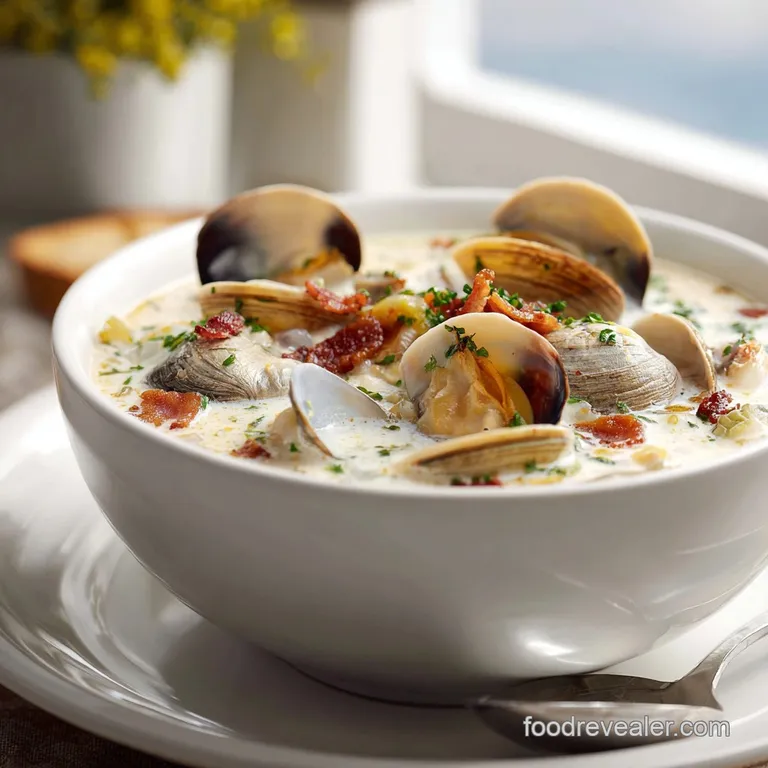
- Time: Active 20 minutes, Passive 30 minutes, Total 50 minutes
- Flavor/Texture Hook: Smoked bacon base meets velvety, sea salted cream
- Perfect for: Rainy weeknight dinners or a comforting coastal themed family gathering
- Master the Ultimate Clam Chowder Recipe Video
- Why This Hearty Soup Works
- Decision Shortcut for Your Kitchen
- The Alchemy of Umami Elements
- Essential Tools for This Soup
- Gathering Your Essentials
- Step-by-Step Cooking Technique Guide
- Troubleshooting Texture and Flavor Issues
- Adjusting for Different Batch Sizes
- Kitchen Myths and Misconceptions
- Storage and Zero Waste Tips
- Perfect Pairings for Your Meal
- Very High in Sodium
- Recipe FAQs
- 📝 Recipe Card
Master the Ultimate Clam Chowder Recipe Video
There is nothing quite as soul crushing as sitting down to a bowl of chowder only to find it's either as thin as skim milk or so thick with flour that it tastes like library paste.
I remember the first time I tried making this for my family; I rushed the roux, didn't let the potatoes release their starch, and ended up with a gray, watery mess that had rubbery little bits of clam floating sadly on top. It was a texture nightmare that left us all reaching for the bread basket just to feel full.
The secret to a truly satisfying bowl isn't just about the cream; it's about the architecture of the broth. We want a base that clings to the back of a spoon with a "velvety" finish, yet remains light enough that you can finish a whole bowl without feeling weighed down.
This version focuses on the contrast between the "shatter" of crispy bacon and the tender, buttery "give" of a perfectly simmered Yukon Gold potato.
In this guide, we're going to fix those common texture pitfalls together. You'll learn why we start with a cold pot for the bacon and why that tiny splash of red wine vinegar at the very end is the most important ingredient in your pantry. Let's crack on and build a pot of comfort that actually satisfies the soul.
Why This Hearty Soup Works
Starch Synergism: This recipe uses both a traditional flour roux and the natural starch from Yukon Gold potatoes to create a multi dimensional thickness that doesn't feel heavy.
As the potatoes simmer, their outer edges soften and release amylopectin, which bonds with the cream to create a silky mouthfeel.
The Acid Balance: Heavy cream and clams are both inherently rich and sweet, which can lead to a "flat" flavor profile after a few bites. Adding a teaspoon of red wine vinegar at the end provides a bright top note that cuts through the fat, making every spoonful taste as fresh as the first.
Residual Heat Steeping: Clams are notorious for turning into rubber bands when boiled. By adding them after the pot is removed from the burner, the "Residual Heat Steep" gently warms them through, preserving their tender, oceanic texture.
Decision Shortcut for Your Kitchen
| Method | Time | Texture | Best For |
|---|---|---|---|
| Traditional Stovetop | 50 minutes | Thick, silky, and deeply layered | Maximum control over vegetable texture |
| Slow Cooker | 4 hours | Thinner broth, very soft potatoes | Hands off prep for busy workdays |
| Dutch Oven (Heavy) | 50 minutes | Even heat, best bacon rendering | Achieving that perfect mahogany bacon color |
The Alchemy of Umami Elements
| Ingredient | Science Role | Pro Secret |
|---|---|---|
| Bacon Fat | Flavor Carrier | Start in a cold pan to render the most fat without burning the meat. |
| Yukon Gold Potatoes | Primary Thickener | These have a medium starch content that holds its shape while still enriching the broth. |
| Heavy Cream | Emulsion Base | The high fat content prevents the soup from "breaking" or curdling when it hits the acidic clam juice. |
| Red Wine Vinegar | Flavor Catalyst | It resets the palate and highlights the natural sweetness of the seafood. |
The foundation of any great chowder is the liquid gold left behind by the bacon. We're using 6 oz of thick cut bacon, and I cannot stress enough how much better this is than using oil.
The fat molecules actually wrap around the vegetable aromatics, protecting them as they soften and ensuring the smoky flavor is infused into every single drop of the final soup.
When we talk about the potatoes, we're looking for that 1.5 lbs of Yukon Golds. If you find yourself out of these, you could use a Broccoli Casserole recipe as inspiration for other vegetable bases, but for a classic chowder, the potato is king. The way the starch interacts with the 1/3 cup of all purpose flour is what prevents the dairy from separating.
Essential Tools for This Soup
To get the results you see in the clam chowder recipe video, a heavy bottomed 6 quart Dutch oven (such as a Lodge or Le Creuset) is your best friend. The thick cast iron distributes heat evenly, which is vital when you’re whisking the roux and simmering the dairy.
If you use a thin stainless steel pot, you run the risk of scorching the flour or the milk at the bottom, which will leave bitter, burnt flakes throughout your beautiful white soup.
You will also need a sturdy wire whisk. When you add the 19.5 oz of clam juice to the flour and fat, you need to whisk vigorously to ensure there are no lumps. A "flat" whisk is particularly helpful here for getting into the edges of the pot.
Don't forget a slotted spoon to rescue those bacon bits you want them to stay "crispy" for the garnish, not soggy in the simmer.
Gathering Your Essentials
- 6 oz thick cut bacon, diced: Provides the smoky fat base and a salty, "crispy" garnish.
- 2 tbsp unsalted butter: Adds a creamy richness to the sautéed vegetables.
- 1 large white onion, diced: The aromatic foundation; use white for a cleaner, sharper flavor than yellow.
- 3 stalks celery, finely diced: Adds a subtle earthy note and essential texture.
- 1/3 cup all purpose flour: The structural glue that thickens the liquid base. Why this? It creates a stable roux that prevents the heavy cream from separating.
- 19.5 oz canned chopped clams: Use three 6.5 oz cans; the meat is tender and the juice is pure ocean flavor.
- 8 oz bottled clam juice: Provides the necessary liquid volume without diluting the seafood taste.
- 1.5 lbs Yukon Gold potatoes: Peeled and cut into 1/2 inch cubes. Why this? They provide a "buttery" texture that doesn't disintegrate like Russets.
- 2 cups heavy cream: For that signature "velvety" mouthfeel.
- 1 cup whole milk: Lightens the texture slightly so the soup isn't overly cloying.
- 2 bay leaves: Infuses a subtle herbal depth.
- 1 tsp dried thyme: The classic herb pairing for New England seafood.
- 1/2 tsp black pepper: Adds a gentle back of-the throat heat.
- 1/2 tsp salt: Enhances the natural salinity of the clams.
- 1 tsp red wine vinegar: The "secret weapon" that brightens the entire pot.
| Original Ingredient | Substitute | Why It Works |
|---|---|---|
| Heavy Cream | Half and Half | Lighter texture, but slightly higher risk of curdling if boiled. |
| Clam Juice | Vegetable Stock | Provides volume, but you will lose that deep "oceanic" punch. |
| Bacon | Salt Pork | A traditional choice that is saltier and less smoky than bacon. |
step-by-step Cooking Technique Guide
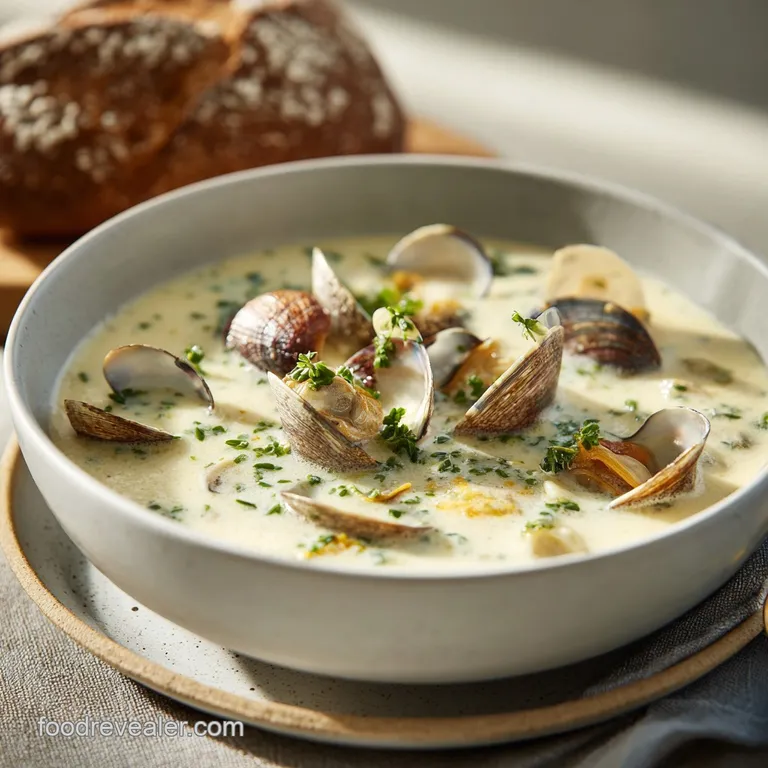
- Place the diced bacon in a cold 6 quart Dutch oven and turn the heat to medium. Cook until the bacon bits are crispy and mahogany colored, which usually takes about 8-10 minutes. Note: Starting cold allows the fat to render slowly without burning the meat.
- Remove the bacon with a slotted spoon and set it aside on a paper towel. Ensure you leave all that rendered fat in the pot for flavor.
- Add the butter to the bacon fat. Once it's foaming and "sizzling", add the diced onions and celery. Sauté for 5-7 minutes until the onions are translucent and soft. Note: Do not let them brown, as this will discolor your white chowder.
- Whisk in the flour to create a roux. Cook for 1-2 minutes while stirring constantly to toast the flour and remove the raw taste.
- Slowly whisk in the reserved clam juice from the cans and the additional bottled clam juice. Whisk until the base is perfectly smooth and starting to thicken.
- Add the cubed potatoes, bay leaves, thyme, pepper, and salt. Bring the mixture to a gentle simmer. Cook for 15-20 minutes until the potatoes are tender when pierced with a fork.
- Lower the heat to its lowest setting and stir in the heavy cream and whole milk. Bring back to a bare simmer, but absolutely do not let it reach a rolling boil, or the dairy may break.
- Stir in the reserved clams and the crispy bacon bits. Add the red wine vinegar and stir once. Remove from heat and let sit for 5 minutes. This "Residual Heat Steep" warms the clams through without making them tough.
Troubleshooting Texture and Flavor Issues
Why Your Chowder Is Thin
If your soup looks more like a broth than a thick chowder, you likely didn't cook the potatoes long enough to release their starch, or the roux wasn't properly developed. You can fix this by taking a potato masher and crushing about 10% of the potatoes directly in the pot.
This releases instant starch and thickens the liquid without needing more flour.
Why the Dairy Curdled
Seeing little white clumps in your soup usually means the heat was too high after the cream was added. Boiling heavy cream with acidic clam juice can cause the proteins to clump. To prevent this, always keep the heat at a "bare simmer." If it has already happened, you can sometimes save it by whisking in a tablespoon of cold heavy cream off the heat to lower the temperature quickly.
| Problem | Root Cause | Solution |
|---|---|---|
| Rubbery Clams | Overcooking | Only add clams at the very end and remove from heat immediately. |
| Metallic Taste | Low quality canned clams | Always add 1 tsp of red wine vinegar to neutralize "tinny" notes. |
| Lumpy Base | Adding liquid too fast | Whisk the clam juice in slowly, one splash at a time, until smooth. |
Common Mistakes Checklist:
- ✓ Never boil the soup once the cream and milk have been added.
- ✓ Don't skip the bacon rendering; that fat is the primary flavor driver.
- ✓ Ensure potatoes are cut into uniform 1/2 inch cubes for even cooking.
- ✓ Always taste for salt after adding the clams, as they bring their own salinity.
- ✓ Let the soup rest for 5 minutes before serving to allow the flavors to "marry."
Adjusting for Different Batch Sizes
When you need to scale this recipe down for a quiet dinner for two, it's quite simple. Use a smaller pot to ensure the liquid still covers the potatoes, and reduce your cook times by about 20%. For the egg in the roux (if you were using a binder), you'd just use half, but here, simply halve the flour and butter.
Scaling up for a big family reunion is where things get tricky. If you double the recipe, only increase the salt and spices by 1.5x initially. You can always add more later, but the salt from the bacon and clams can become overwhelming in large batches. Also, work in a very large pot to ensure you have enough room to whisk the roux without splashing. If you are serving this alongside Southern homemade biscuits, you'll have a meal that can feed a crowd with very little extra effort.
Kitchen Myths and Misconceptions
Some people believe that "authentic" chowder must only use fresh clams. While fresh quahogs are wonderful, the "Best Clam Chowder with Canned Clams" is actually a staple in many New England homes because the canning process preserves the juice, which is where most of the flavor lives.
Don't feel like you're cheating by using the cans; you're actually ensuring a consistent, salty punch that fresh clams sometimes lack.
Another myth is that you need to use flour to make it thick. While our recipe uses a roux for stability, some "Old Fashioned Clam Chowder" recipes rely entirely on mashed potatoes. While this is gluten-free, it often results in a grainier texture.
The combination of flour and starch we use here is the true secret to that "velvety" finish.
Storage and Zero Waste Tips
This chowder stays fresh in the fridge for up to 3 days. In fact, many people (myself included) think it tastes even better on the second day because the flavors have had time to fully develop. When reheating, do it over low heat on the stovetop.
Never use the microwave for cream based soups if you can help it, as it creates hot spots that can cause the dairy to "break."
I don't recommend freezing this dish. Potatoes tend to become "mealy" and "spongy" after freezing and thawing, and the cream can separate into a grainy mess. If you have leftovers you can't finish, try using the thick base as a sauce for crispy salmon patties. Just reduce the liquid slightly and pour it over the fish for a decadent seafood dinner.
To reduce waste, don't throw away your celery leaves! Finely chop them and use them as a garnish along with the bacon. They have a concentrated celery flavor that adds a beautiful "bright" pop to the top of the bowl.
Perfect Pairings for Your Meal
A bowl of this "Authentic Clam Chowder Recipe" is quite rich, so you want to pair it with something that offers a "crispy" or "tart" contrast. The traditional choice is oyster crackers, which provide a salty crunch that mimics the bacon.
However, a thick slice of sourdough bread is also brilliant for mopping up every last drop of the "silky" broth.
If you want to turn this into a full "Classic New England Chowder Recipe" experience, serve it with a light, leafy green salad dressed in a sharp lemon vinaigrette. The acidity of the salad will cleanse your palate between spoonfuls of the "creamy seafood chowder recipe." It makes the whole meal feel balanced rather than heavy, ensuring you leave the table feeling satisfied rather than stuffed.
Whether you are following a "chowder recipe video" or this written guide, the key is to take your time and enjoy the process of building these layers of flavor.

Very High in Sodium
985 mg of sodium per serving (43% of daily value)
The American Heart Association recommends limiting sodium intake to less than 2,300mg per day, with an ideal limit of less than 1,500mg for most adults.
Tips to Reduce Sodium
-
Choose Lower Sodium Bacon-25%
Opt for low-sodium or no-salt added thick cut bacon. This is a significant contributor to the overall sodium content.
-
Select No-Salt Added Canned Clams-20%
Substitute the regular canned chopped clams with no-salt added versions and reserve their natural juice. If unavailable, rinse regular clams thoroughly.
-
Use Reduced Sodium or Unsalted Clam Juice-20%
Replace the bottled clam juice with a reduced sodium or unsalted variety to significantly cut down on added salt.
-
Reduce Added Salt-15%
Omit the 1/2 tsp of added salt entirely and taste before adding any more. Seasonings from bacon and other ingredients may be sufficient.
-
Boost Flavor with Herbs and Spices
Amplify the dish's flavor by using fresh or dried herbs like parsley, dill, or chives, and additional black pepper. Garlic powder and onion powder can also add depth without sodium.
-
Use Unsalted Butter-5%
Ensure you are using unsalted butter. This avoids any unnecessary added sodium from the fat component.
Recipe FAQs
How to keep the clams from becoming rubbery?
Add the clams at the very end and utilize a residual heat steep. By removing the pot from the heat after adding the clams, you gently warm them through without the high heat exposure that causes their proteins to seize and toughen.
Is it safe to freeze this clam chowder for later?
No, this is a common misconception. The dairy base and potatoes do not hold up well to freezing; the cream will separate and become grainy, while the potatoes lose their structural integrity and turn mealy.
How to achieve the perfect broth thickness without overcooking the potatoes?
Simmer until the smaller potato cubes begin to break down into the broth. This natural starch release creates a velvety texture, a principle of balancing density similar to how you build body in our hearty vegetable soup.
Why is it necessary to start the bacon in a cold pot?
Render the fat slowly to ensure the bacon bits turn mahogany colored without burning. Starting cold allows the fat to liquefy gradually, ensuring you have enough flavorful oil in the pan to sauté your aromatics properly.
How to reheat leftovers without the soup breaking?
Reheat slowly over low heat on the stovetop. Avoid the microwave, as its uneven heating creates hot spots that cause the dairy emulsion to split into a watery and grainy texture.
Should I brown the onions and celery when sautéing?
No, keep them translucent and soft. Browning introduces sweet, caramelized notes that can overpower the delicate flavor of the clams; keep the heat low and focused on softening the vegetables.
How to prevent the raw flour taste in the soup?
Cook the roux for at least 1-2 minutes after whisking the flour into the butter and bacon fat. This ensures the starch is sufficiently toasted before you introduce the liquid base, creating a smooth and neutral foundation for your chowder.
Classic New England Clam Chowder
Ingredients:
Instructions:
Nutrition Facts:
| Calories | 683 kcal |
|---|---|
| Protein | 19 g |
| Fat | 46 g |
| Carbs | 27 g |
| Fiber | 3 g |
| Sugar | 5 g |
| Sodium | 985 mg |
