Creamy Tuscan Chicken Pasta
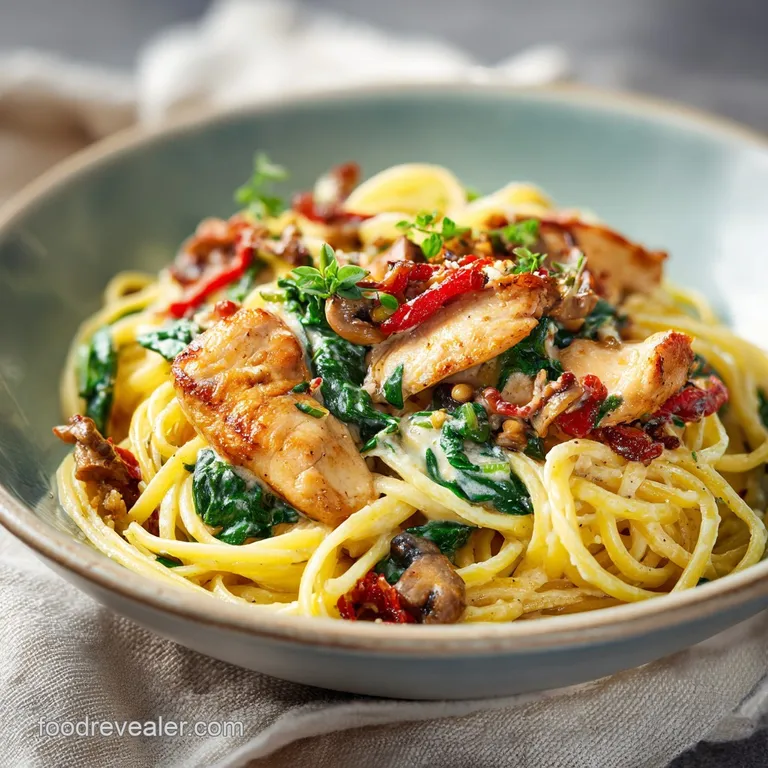
- Time: Active 15 minutes, Passive 15 minutes, Total 30 minutes
- Flavor/Texture Hook: Velvety Parmesan cream with zesty sun dried tomatoes
- Perfect for: Weeknight date nights or a comforting family dinner
- The Magic Behind the Flavor
- Speed and Yield Breakdown
- The Components of a Silky Sauce
- Tools for Kitchen Success
- Step-by-Step Sauce Mastery
- Troubleshooting Your Tuscan Sauce
- Adjusting the Recipe Size
- Myths About Creamy Pasta
- Storing and Reheating Success
- Perfect Side Dish Pairings
- Recipe FAQs
- 📝 Recipe Card
The Magic Behind the Flavor
The secret to this dish isn't just the heavy cream; it's the chemistry of the pan. We are building layers of flavor that start with the chicken and end with the starch in the pasta water.
- Maillard Reaction: Searing the chicken in sun dried tomato oil creates a brown crust (fond) on the pan, which acts as a concentrated flavor base for the cream sauce.
- Starch Emulsification: The linguine releases amylose starch into the boiling water, which, when tossed with the cream and cheese, creates a permanent bond between the fat and liquid.
- Acid Balance: The acetic acid in the sun dried tomatoes cuts through the high fat content of the heavy cream, preventing the dish from tasting overly "heavy" or one note.
- Casein Binding: Freshly grated Parmesan contains casein proteins that melt smoothly into the warm cream, provided the heat is low enough to prevent the fats from separating.
| Thickness | Internal Temp | Rest Time | Visual Cue |
|---|---|---|---|
| 1/2 inch | 165°F | 3 mins | Opaque center, clear juices |
| 3/4 inch | 165°F | 5 mins | Firm to touch, golden crust |
| 1 inch | 165°F | 7 mins | Deep gold, no pink remaining |
This timing chart is vital because nothing ruins a meal faster than dry meat. If you find yourself enjoying the process of making chicken dishes like this, you might also love the technique used in my Lemon Chicken Piccata recipe, which also relies on a quick pan sear and a bright sauce. Both recipes prove that you don't need all day to get a deep, savory crust on your protein.
Speed and Yield Breakdown
When you're dealing with a 30 minute window, efficiency is your best friend. This recipe is designed to serve four people generously, but it scales beautifully if you're cooking for a crowd or just meal prepping for the week.
For the Chicken
The chicken provides the bulk of the protein and the primary texture contrast. By slicing the 1.5 lbs of boneless skinless chicken breasts into thin cutlets, we increase the surface area for the smoked paprika and garlic powder to work their magic.
This also ensures the meat cooks in under 8 minutes, which is the sweet spot for maintaining moisture.
For the Pasta Base
Using 12 oz of dry linguine is intentional. It’s a sturdy pasta that can handle the weight of a thick cream sauce without breaking. If you swap this for a thinner pasta like angel hair, you’ll find the sauce absorbs too quickly, leaving you with a sticky mess.
The linguine's flat surface area is the perfect canvas for the 2 cups of heavy cream and the melted Parmesan.
The Components of a Silky Sauce
| Ingredient | Science Role | Pro Secret |
|---|---|---|
| Heavy Cream | Fat Emulsion | Use room temperature cream to prevent the sauce from "breaking" when it hits the hot pan. |
| Sun dried Tomato Oil | Flavor Carrier | This oil is infused with tomato essence; never swap it for plain vegetable oil. |
| Parmesan Cheese | Stabilizer | Freshly grated melts better than pre shredded, which is coated in starch that causes graininess. |
| Baby Spinach | Moisture Balance | The leaves wilt instantly, releasing just enough water to loosen the thick cream slightly. |
Essential Ingredients and Swaps
To get that classic Tuscan profile, you need the right building blocks. Here is exactly what I use to keep the kitchen chaos at bay.
- 1.5 lbs Chicken Breast: Sliced into thin cutlets. Why this? Thin cuts cook faster and stay more tender than whole thick breasts.
- 12 oz Linguine: The ideal sauce to carb ratio. Why this? The flat shape holds the velvety cream better than round spaghetti.
- 0.5 cup Sun dried Tomatoes: Use the ones packed in oil. Why this? They provide both the "meat" of the flavor and the cooking fat.
- 2 cups Heavy Cream: The heart of the sauce. Why this? Lower fat milks will curdle when they meet the acidic tomatoes.
- 1 cup Parmesan: Freshly grated is a must. Why this? It acts as a thickener and a seasoning all in one.
| Original Ingredient | Substitute | Why It Works |
|---|---|---|
| Heavy Cream (2 cups) | Full fat Coconut Milk | Similar fat content. Note: Adds a slight nutty flavor but stays creamy. |
| Linguine (12 oz) | Zucchini Noodles | Low carb alternative. Note: Do not boil; just toss in the warm sauce at the end. |
| Chicken Breast | Large Shrimp | Cooks in 3 minutes. Note: Similar to my Garlic Butter Shrimp recipe. |
Sometimes I'll even swap the chicken for pre cooked Italian sausage if I'm really short on time. The spices in the sausage play off the oregano and red pepper flakes perfectly. Just make sure you still use that sun dried tomato oil for the base flavor.
Tools for Kitchen Success
You don't need a pantry full of gadgets for this. A large, deep skillet is your primary workhorse here. I prefer stainless steel because it creates the best "fond" (those tasty brown bits), but a good quality non stick pan will work if you're worried about cleanup.
You'll also need a large pot for the pasta. A little trick I learned is to use less water than the box suggests just enough to cover the noodles by an inch. This makes the pasta water extra starchy, which helps the sauce bind later. Finally, a microplane or a fine grater for that Parmesan is non negotiable.
If the cheese is in big chunks, it won't melt into the sauce; it'll just clump.
step-by-step Sauce Mastery
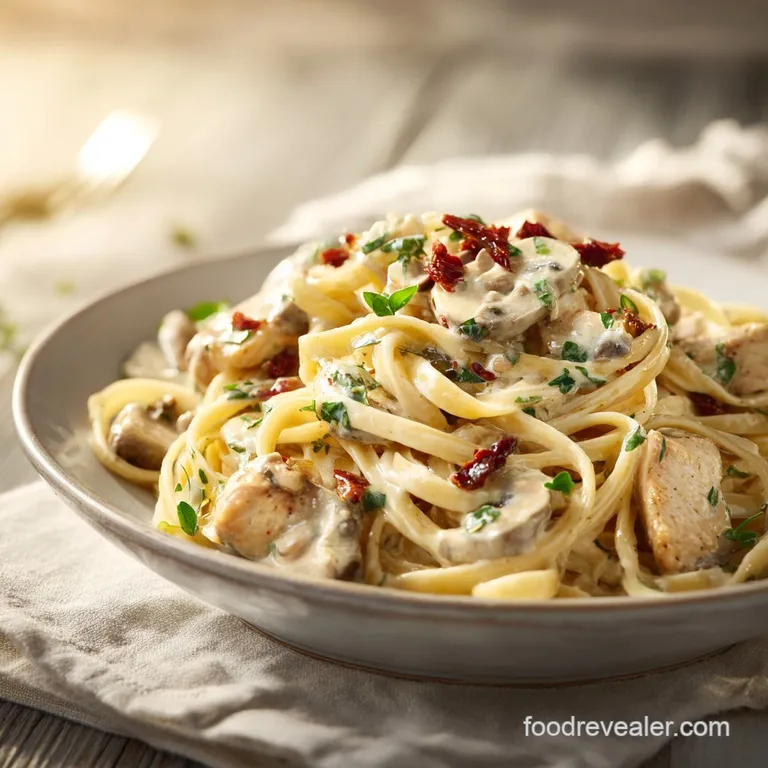
- Boil the linguine. Cook the 12 oz of pasta in salted water for about 8-10 minutes until al dente. Note: Save a cup of the starchy water before draining.
- Season the chicken. Rub the 1.5 lbs of sliced chicken with 1 tsp smoked paprika, 1 tsp garlic powder, salt, and pepper.
- Sear the poultry. Heat 1 tbsp of sun dried tomato oil in your skillet and cook the chicken until golden and opaque (about 4 mins per side).
- Remove and rest. Set the chicken aside on a plate. Note: Resting allows the juices to redistribute so the meat doesn't dry out.
- Sauté the aromatics. In the same pan, add the 0.5 cup chopped sun dried tomatoes and 3 minced garlic cloves until fragrant and softened.
- Build the base. Pour in the 2 cups of heavy cream and add 1 tsp dried oregano and 0.5 tsp red pepper flakes.
- Simmer and thicken. Let the cream bubble gently for 3-5 minutes until it slightly coats the back of a spoon.
- Melt the cheese. Whisk in the 1 cup of Parmesan cheese slowly. Note: Keep the heat low here to prevent the sauce from graining.
- Wilt the greens. Stir in the 2 cups of fresh baby spinach until bright green and collapsed.
- Combine everything. Toss the linguine and chicken back into the pan, adding a splash of pasta water if it looks too thick.
Troubleshooting Your Tuscan Sauce
If your sauce looks a bit wonky, don't panic. Most cream based issues are heat related. If the sauce is "breaking" (meaning you see oil separating from the white cream), it usually means the pan got too hot.
Why Your Sauce Grains
Grainy sauce is almost always caused by the cheese. If you use the stuff from a green shaker bottle or even pre shredded bags, the cellulose prevents it from melting smoothly. Also, if you dump all the cheese in at once into boiling cream, the proteins seize up.
Always add it off the heat or on the lowest setting, whisking constantly.
| Problem | Root Cause | Solution |
|---|---|---|
| Sauce is too thin | Not enough reduction | Simmer for 2 more minutes or add extra Parmesan to bind the fats. |
| Sauce is too thick | Cream over reduced | Add 2-3 tablespoons of reserved starchy pasta water to loosen it up. |
| Spinach is slimy | Overcooked | Only add spinach at the very end; it only needs 30 seconds of residual heat. |
If you find the sauce is still too thin after simmering, you can also whisk in a teaspoon of cornstarch mixed with cold water, but the Parmesan usually does the trick. Always taste for salt at the very end, as the sun dried tomatoes and cheese are already quite salty.
- ✓ Pat the chicken completely dry before seasoning to ensure a crisp sear.
- ✓ Grate your Parmesan fresh from a block for a silky, non gritty texture.
- ✓ Don't boil the cream aggressively; a gentle simmer prevents separation.
- ✓ Reserve your pasta water it is the ultimate "liquid gold" for sauce consistency.
- ✓ Use a heavy bottomed skillet to ensure even heat distribution.
Adjusting the Recipe Size
Scaling this recipe is straightforward because the ratios are quite forgiving. If you're cutting the recipe in half, use a smaller skillet to prevent the cream from evaporating too quickly. For a half batch, use one large chicken breast and about 6 oz of pasta.
| Servings | Ingredient Adjustments | Pan Size | Cook Time |
|---|---|---|---|
| 2 People | 0.75 lb chicken, 6 oz pasta | 10 inch skillet | 25 mins |
| 4 People | 1.5 lb chicken, 12 oz pasta | 12 inch skillet | 30 mins |
| 8 People | 3 lb chicken, 24 oz pasta | Dutch Oven | 45 mins |
If you are doubling the recipe for a party, I recommend searing the chicken in two batches. Overcrowding the pan will cause the meat to steam instead of sear, and you'll miss out on that beautiful golden crust.
Also, remember to only increase spices like red pepper flakes by about 1.5x so you don't accidentally blow your guests' heads off with heat.
Myths About Creamy Pasta
There's a common belief that you need flour or a roux to make a thick cream sauce. That's a myth. For a Creamy Tuscan Chicken Pasta, the reduction of the heavy cream combined with the emulsifying power of the Parmesan and pasta starch is more than enough to create a thick, luxurious coating.
Adding flour often makes the sauce taste "pasty" and masks the bright acidity of the tomatoes.
Another myth is that you must rinse your pasta after boiling. Never do this! Rinsing washes away the surface starch that helps the sauce stick to the noodles. You want that starch. It’s the invisible glue that makes the dish cohesive rather than a pile of oily noodles sitting in a pool of cream.
Storing and Reheating Success
This dish is a champion of the "lunch leftovers" category. In the fridge, it stays good for up to 3 days in an airtight container. However, the pasta will continue to absorb the sauce as it sits, so it might look a bit dry the next day.
To reheat, avoid the microwave if possible. Instead, put it back in a skillet with a splash of milk or water over low heat. Stir gently until the cream loosens up and becomes velvety again. If you must use a microwave, do it in 30 second bursts and stir in a teaspoon of water halfway through.
I don't recommend freezing this dish, as heavy cream has a tendency to separate and become grainy once thawed and reheated.
For a zero waste tip: if you have leftover sun dried tomato oil in the jar, save it! It’s incredible for sautéing morning eggs or drizzling over roasted vegetables. The leftover spinach stems can also be chopped finely and tossed into a soup or a morning omelet for extra nutrients.
Perfect Side Dish Pairings
Because this pasta is quite rich, you want sides that offer a crisp, acidic, or bitter contrast. A simple arugula salad with a lemon vinaigrette is my go to. The peppery bite of the greens cuts through the Parmesan cream perfectly.
If you want something heartier, a side of roasted broccoli or charred asparagus works wonders. The charred edges of the vegetables mimic the savory notes of the seared chicken. And of course, a thick slice of crusty sourdough or garlic bread is essential for mopping up every last drop of that sauce.
Trust me, you won’t want to leave a single bit in the pan.
Recipe FAQs
Can I use heavy cream substitutes like half and-half or whole milk?
No, heavy cream is essential for true Tuscan texture. Milk or half and-half lacks the necessary fat content, leading to a sauce that will easily curdle or remain too thin when the Parmesan is added.
How to achieve a deep sear on the chicken breasts quickly?
Slice the chicken thinly, pat it completely dry, and use high heat with the sun dried tomato oil. Thin cutlets maximize surface area contact with the hot pan, rapidly developing the Maillard reaction needed for flavor fond.
Is it true I must use freshly grated Parmesan cheese instead of pre-shredded?
Yes, freshly grated cheese is absolutely necessary for a smooth sauce. Pre-shredded cheese contains anti caking agents that prevent full melting, which results in a grainy or clumpy sauce texture.
How to prevent the cream sauce from separating or "breaking" after adding the tomatoes?
Reduce the pan heat to low just before adding the cheese and stir constantly. The acidity in the sun dried tomatoes can cause separation if the sauce is boiling rapidly; gentle heat stabilizes the emulsion, similar to how you manage heat when making a delicate frosting.
What pasta shape best holds this thick, velvety sauce?
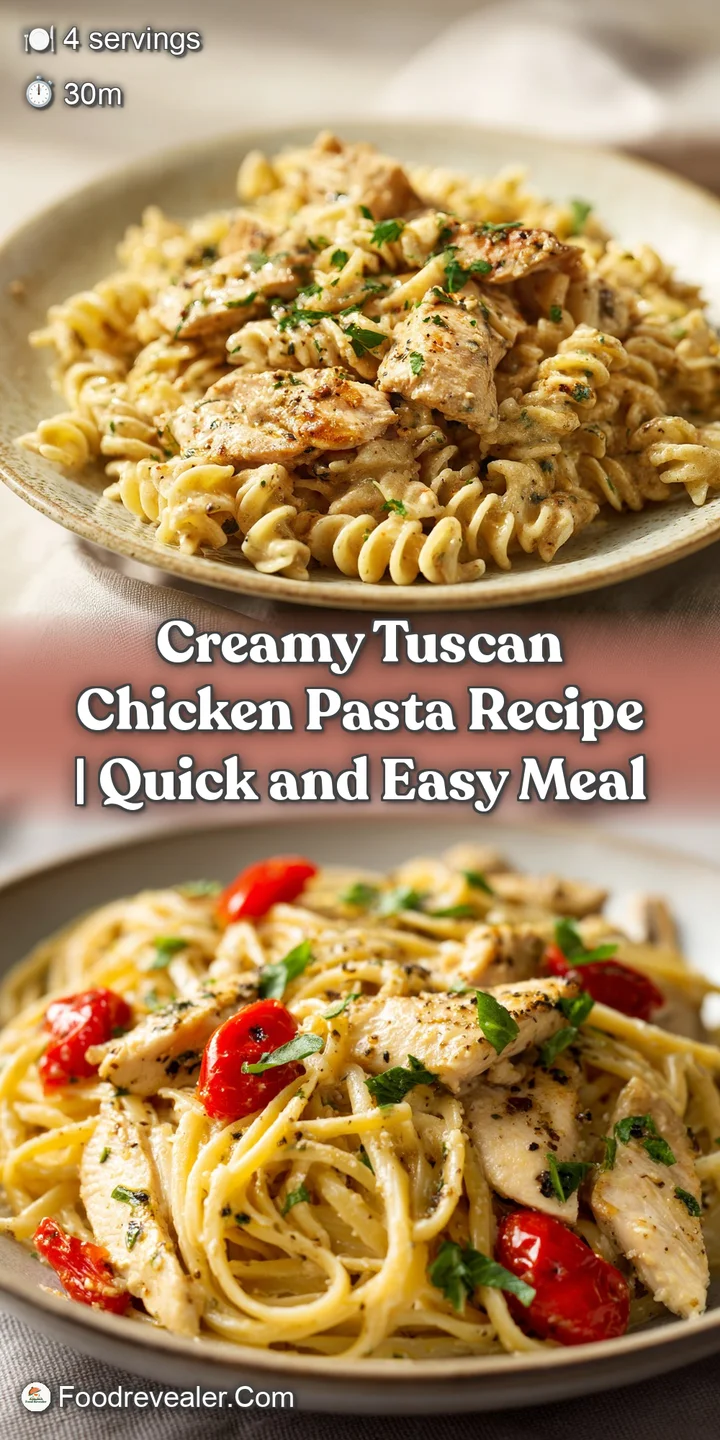
Linguine is the ideal choice for this recipe. Its flat surface area allows the rich cream sauce to cling perfectly without sliding off, unlike rounder shapes like spaghetti.
How to incorporate vegetables like mushrooms or zucchini into this dish?
Sauté firm vegetables like mushrooms immediately after searing the chicken, using the fond as your flavor base. For quick cooking vegetables like zucchini, toss them in with the spinach in the final minute of cooking to prevent over softening.
What side dish contrasts best with the richness of this creamy chicken?
A simple salad with a strong acid component provides the best counterpoint. Try pairing this with a bright, peppery arugula salad dressed heavily with lemon juice and olive oil, which cuts through the heavy cream beautifully.
Tuscan Chicken Pasta Recipe
Ingredients:
Instructions:
Nutrition Facts:
| Calories | 1201 kcal |
|---|---|
| Protein | 74.7 g |
| Fat | 58.7 g |
| Carbs | 73.9 g |
| Fiber | 3.5 g |
| Sugar | 6.2 g |
| Sodium | 780 mg |
