2-Ingredient Orange Sherbert with Condensed Milk
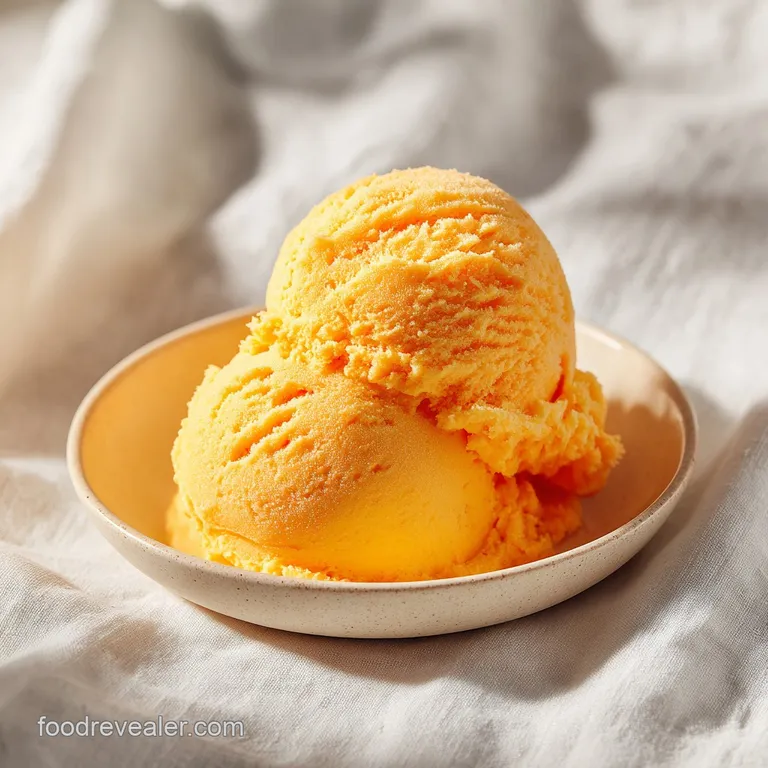
- Time: Active 5 minutes, Passive 6 hours, Total 6 hours 5 mins
- Flavor/Texture Hook: Zesty orange brightness meets a velvety, cream based finish
- Perfect for: Stress free summer hosting or a quick fix kid's treat
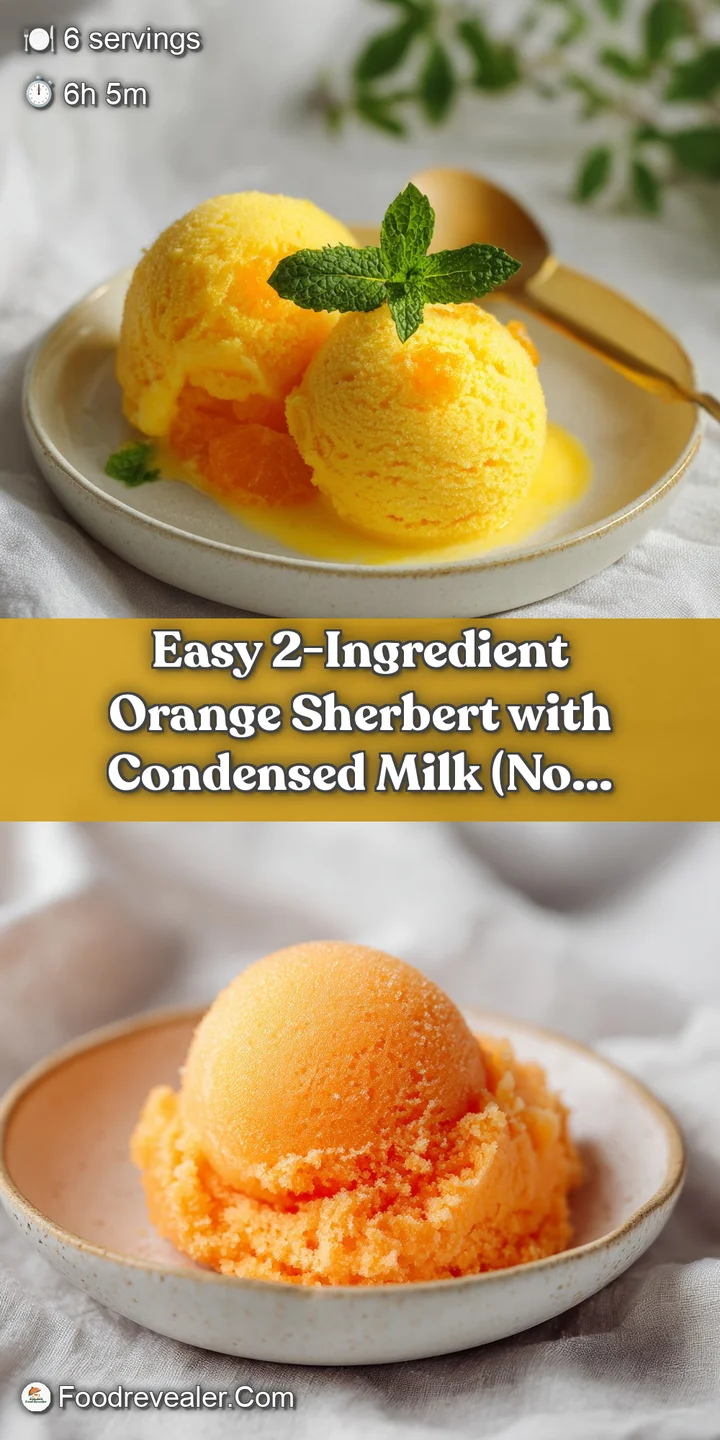
- Perfect 2 Ingredient Orange Sherbert with Condensed Milk
- Essential Specs for This Treat
- The Short Shopping List Needed
- Tools for Easy Frozen Success
- Simple Steps for Creamy Sherbert
- Fixing Common Frozen Dessert Issues
- Fun Ways to Swap Flavors
- Storage and Scooping Success Tips
- Perfect Pairings for Your Dessert
- Frozen Dessert Myth Busters
- Recipe FAQs
- 📝 Recipe Card
Perfect 2 Ingredient Orange Sherbert with Condensed Milk
The first time I encountered this shortcut, I was hovering over a half melted carton of store-bought orange sherbet at a sweltering July backyard BBQ. My neighbor, who treats her kitchen like a laboratory, handed me a small bowl of something that looked different it didn’t have that neon orange artificial glow, but it had a texture that was incredibly silky.
I took one bite and the way it dissolved on my tongue was a revelation; it wasn't icy or grainy, just pure, creamy citrus bliss. Discover how to make unbelievably easy 2 Ingredient Orange Sherbert with Condensed Milk for a refreshing treat.
Honestly, I was certain she’d spent hours churning it in some expensive machine. When she told me it was just two things from her cupboard, I almost dropped my spoon. It turns out that when you skip the complex custard bases and heavy machinery, you’re left with the cleanest flavor imaginable.
This isn't just a "hack" for people who don't want to cook; it’s a legitimate technique that produces a better mouthfeel than most premium brands. We’ve all had those moments where we crave something sweet but the thought of cleaning a blender or an ice cream maker feels like a mountain.
This recipe is the antidote to that kitchen fatigue.
You’re going to love how this behaves in the freezer. Unlike many homemade frozen desserts that turn into a literal brick after two hours, the sugar to fat ratio here keeps things soft and scoopable.
Whether you’re serving this after a heavy dinner or as a mid afternoon pick me-up, it hits that sweet spot between a heavy ice cream and a thin sorbet. It’s light, it’s refreshing, and it’s about to become your new favorite secret weapon.
Essential Specs for This Treat
Understanding the mechanics of freezing is the difference between a grainy mess and a smooth scoop. When we mix 14 oz sweetened condensed milk with 2 cups orange juice, we aren't just stirring liquid; we are creating a stabilized emulsion. The thick, syrupy nature of the milk prevents large ice crystals from forming as the mixture drops in temperature. This is the same principle I use when making a quick batch of something like my Homemade Garlic Knots recipe — it’s all about using the right base to minimize the work later.
- Fat Saturation
- The milk solids in the condensed milk provide a barrier that coats the water molecules in the orange juice.
- Crystal Inhibition
- High sugar concentrations lower the freezing point of the mixture, ensuring it stays soft enough to scoop.
- Acid Balancing
- The citric acid in the orange juice cuts through the cloying sweetness of the milk, creating a balanced profile.
- Density Management
- Because we aren't churning air into the mix, it remains dense and satisfying, similar to a premium gelato.
| Method | Time | Texture | Best For |
|---|---|---|---|
| Still Freezing | 6 hours | Dense and velvety | Minimal effort, hands off prep |
| Ice Cream Maker | 20 minutes | Airy and light | Immediate serving, soft serve style |
| Food Processor | 10 minutes | Slushy/Granular | Quick snacks or "nice cream" vibes |
The choice of method really depends on your patience. If you want that classic "shatter" of a cold scoop against a spoon, the still freezing method in a metal pan is your best bet. Metal conducts cold much faster than glass, which helps the mixture set before the juice has a chance to separate from the dairy.
The Short Shopping List Needed
| Ingredient | Science Role | Pro Secret |
|---|---|---|
| Condensed Milk | Emulsifier and sweetener | Chill the can for 2 hours before opening to keep temperatures low |
| Orange Juice | Flavor base and acidity | Use pulp free juice to ensure the smoothest possible finish |
| Sea Salt | Flavor enhancer | A tiny pinch (not in schema) cuts the sugar and highlights the citrus |
Selecting the right components makes or breaks this two part harmony. You need 14 oz sweetened condensed milk make sure you aren't accidentally grabbing evaporated milk, or you’ll end up with a watery disaster.
The "Why this?" is simple: the sugar is already dissolved into the fat, which is what gives us that velvety texture without gritty sugar granules. For the 2 cups orange juice, I always recommend a high-quality, not from concentrate version.
If you’re feeling fancy, you can swap things around, but keep in mind that the water content matters. For instance, replacing some orange juice with a bit of the liquid from my Homemade Bloody Mary recipe wouldn't work here, but the principle of using high-quality juice remains.
- Sweetened Condensed Milk (14 oz): Use coconut condensed milk for a dairy-free version. Why this? Provides the fat and sugar needed for a non icy texture.
- Orange Juice (2 cups): Use blood orange juice for a deeper color and tartness. Why this? The primary flavor and acid component that balances the milk.
Tools for Easy Frozen Success
You don't need a pantry full of gadgets, but a few specific items will make your life significantly easier. I usually reach for a large stainless steel bowl because it holds the cold better than plastic.
A sturdy whisk is essential; you want to make sure the two liquids are fully married before they head into the freezer. If you see streaks of white and orange, keep whisking.
Chef's Tip: Freeze your whisk and bowl for 15 minutes before you start. This prevents the mixture from warming up too much during the initial "The Cold Incorporation" phase.
For the freezing vessel, a standard 9x5 inch loaf pan is perfect. It provides enough surface area for the cold air to penetrate the center of the sherbet quickly. If the container is too deep, the edges will be icy while the middle remains liquid.
I’ve made that mistake once, and nobody wants a "lava cake" version of sherbet. If you have a lid, use it; otherwise, a tight wrap of plastic pressed directly onto the surface will prevent those pesky ice crystals from forming on top.
Simple Steps for Creamy Sherbert
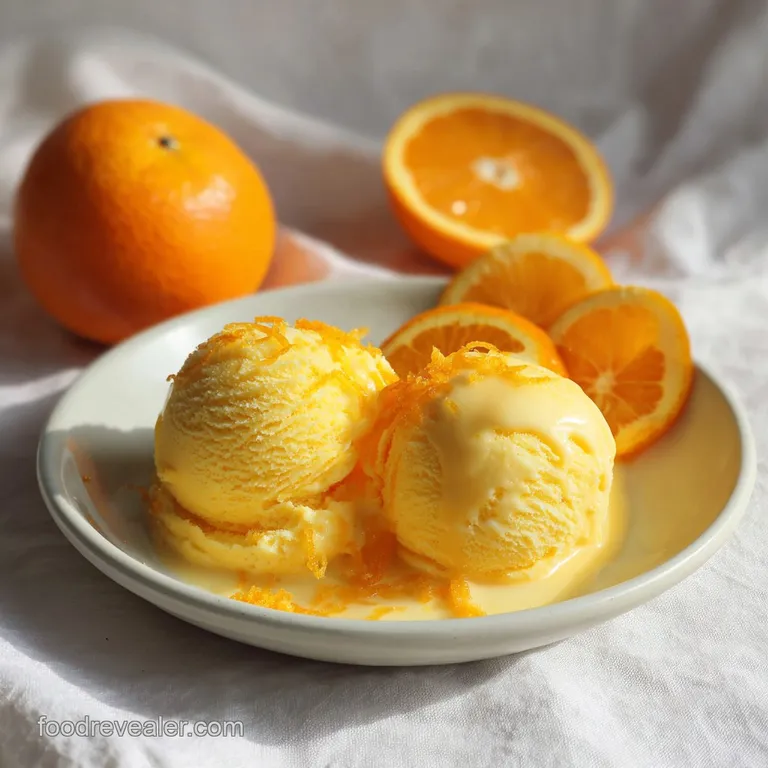
- Place a large metal mixing bowl in the freezer for 10 minutes until it feels biting cold to the touch.
- Pour 14 oz sweetened condensed milk into the chilled bowl. Note: Starting cold helps the emulsion stay stable.
- Slowly stream in 2 cups orange juice while whisking constantly. Whisk until the mixture is uniform and pale orange.
- Add a tiny pinch of salt if you want to sharpen the flavor profile.
- Transfer the liquid into a 9x5 metal loaf pan until it reaches about an inch from the top.
- Tap the pan firmly on the counter three times until all large air bubbles rise and pop.
- Cover the surface with plastic wrap, pressing it directly onto the liquid. Note: This prevents a "skin" or ice crystals from forming.
- Place in the coldest part of your freezer (usually the back) for 6 hours until firm enough to hold a deep scoop.
- Remove from the freezer and let it sit on the counter for 5 minutes until the edges just begin to soften.
- Use a warmed scoop to serve immediately in chilled bowls.
Fixing Common Frozen Dessert Issues
When It Stays Too Icy
If your sherbet feels like a snow cone rather than a creamy dream, the culprit is usually the freezing speed. If your freezer is packed to the gills, air can't circulate, and the sherbet takes too long to set, allowing water molecules to find each other and grow into large crystals.
| Problem | Root Cause | Solution |
|---|---|---|
| Grainy Texture | Large ice crystals formed | Melt the mix slightly, whisk again, and freeze in a shallower pan |
| Separation | Improper mixing | Use a whisk or hand mixer to ensure the milk and juice are fully bonded |
| Too Sweet | Lack of acidity | Stir in a tablespoon of fresh lemon or lime juice to balance the sugar |
Handling Mix Separation
Sometimes you'll see a layer of orange at the bottom and white at the top. This happens if the orange juice was added too quickly or if the mixture wasn't cold enough when it went into the freezer. The fat in the milk wants to float, and the water in the juice wants to sink.
- ✓ Ensure both ingredients are cold before mixing to help them bond.
- ✓ Use a metal pan for faster freezing times.
- ✓ Press plastic wrap directly onto the liquid surface to block air.
- ✓ Avoid opening the freezer door repeatedly while it sets.
- ✓ Let the sherbet sit at room temperature for 5 mins before scooping.
Fun Ways to Swap Flavors
If you want to move away from the classic orange, the world of citrus is your oyster. I’ve tried this with grapefruit juice, and it results in a sophisticated, slightly bitter treat that pairs beautifully with a summer lunch like my Peach Ricotta Bruschetta recipe. The key is to keep the ratio the same: 14 oz of milk to 2 cups of juice.
The Famous Creamsicle Twist
Adding 1 teaspoon of pure vanilla extract to the mix transforms this from a standard sherbet into something that tastes exactly like those nostalgic ice cream bars from the truck. It rounds out the sharp citrus and makes the whole thing feel much more decadent.
Adding a Tropical Flare
Swap half of the orange juice for pineapple juice. The bromelain in the pineapple gives it a slight "zing" that is incredibly refreshing. I also love to toss in a tablespoon of lime zest right before freezing to add a pop of bright green color and an extra hit of essential oils.
Making an Adult Spritz
For a dinner party, you can add 1 tablespoon of vodka or orange liqueur. Alcohol doesn't freeze, so it actually makes the sherbert even softer. Just don't add more than a tablespoon, or it won't set at all! This is a great way to serve a "palette cleanser" between courses.
Storage and Scooping Success Tips
Keep your 2 Ingredient Orange Sherbert with Condensed Milk in the very back of the freezer. The door is the warmest part because it’s constantly exposed to room air, and temperature fluctuations are the enemy of smooth frozen treats.
If you plan on keeping it longer than a few days, transfer it to an airtight container with a tight lid.
- Fridge: Not recommended (it’s a frozen dessert!).
- Freezer: Up to 1 month. Beyond that, the texture begins to degrade as "freezer burn" sets in.
- Zero Waste: If you have leftover sherbet that has melted too much, don't toss it! Pour it into a blender with a handful of ice and a splash of milk for a quick orange smoothie. You can also pour the liquid into popsicle molds for the kids.
Perfect Pairings for Your Dessert
This sherbet is quite sweet, so I love pairing it with something that has a bit of salt or crunch. A simple shortbread cookie or a sprinkle of toasted coconut flakes on top adds a much needed textural contrast.
If you’re serving this as part of a larger brunch spread, it provides a lovely cold contrast to warm dishes.
The acidity in the orange also makes it a great companion to dark chocolate. A few shavings of 70% cocoa chocolate on top of a scoop of homemade orange sherbert creates a "Terry's Chocolate Orange" effect that is absolutely killer.
For a more "grown up" presentation, serve a scoop in a chilled glass and pour a bit of sparkling Prosecco over the top for a simple, elegant float.
Frozen Dessert Myth Busters
A common misconception is that you need to stir the mixture every 30 minutes while it freezes to keep it smooth. While that’s true for some fruit sorbets, the high fat content in the condensed milk handles that work for us.
Churning it manually actually introduces air bubbles that can lead to more ice crystals in this specific recipe.
Another myth is that you can’t make this with fresh squeezed juice. You absolutely can! Just be sure to strain it through a fine mesh sieve. Any bits of pulp will freeze into hard little nuggets that ruin the velvety texture we’re going for. Use "clear" juice for the best results every single time.
Finally, don't believe that you can swap the condensed milk for heavy cream and get the same result. Heavy cream doesn't have the same sugar concentration, meaning you'd end up with a very hard, unsweetened block of orange ice. The "magic" is in the pre dissolved sugar and reduced milk solids of the condensed version.
It’s a specific chemical balance that makes this two ingredient wonder possible.
Decision Shortcut: If You Want X, Do Y
- If you want a softer, gelato like scoop, add 1 tablespoon of vodka to the base mixture.
- If you want a tart, punchy flavor, replace 1/2 cup of orange juice with fresh lemon juice.
- If you want an instant version, blend the ingredients with 3 cups of ice and serve as a slushy.
❓ FAQ
Can I use light or fat free condensed milk for this? You can, but the texture will be significantly icier. The fat in full fat sweetened condensed milk is what prevents large ice crystals from forming. If you use a lower fat version, expect a texture closer to a granita than a smooth sherbert.
Why is my sherbet separating into layers in the freezer? This usually happens if the orange juice and condensed milk aren't fully emulsified. To prevent this, make sure both ingredients are cold before mixing and whisk them vigorously until the mixture is a uniform color with no streaks.
How long does it need to sit out before I can scoop it? Usually, 5 to 10 minutes at room temperature is the sweet spot. Because this recipe doesn't have the air incorporated by an ice cream maker, it freezes quite solid.
A brief rest allows the outer edges to soften just enough for a clean scoop.
Can I use frozen orange juice concentrate instead? Yes, but you must reconstitute it first according to the package directions. Do not add the undiluted concentrate directly to the milk, as the sugar levels will be far too high and the sherbert may never fully set.
Is it possible to make this dairy-free? Absolutely. You can find sweetened condensed coconut milk or oat milk in most health food stores. Use the same 14 oz measurement. Note that the flavor will have a distinct coconut or oat undertone, which actually pairs beautifully with the orange.
Recipe FAQs
What does adding condensed milk to ice cream do?
It increases richness and prevents ice crystals. The high sugar and fat content acts as an anti freeze, lowering the freezing point and keeping the mixture smooth and scoopable without churning.
What ingredients are in orange sherbet?
Traditionally, it contains orange juice, sugar, and milk or cream. This recipe simplifies that by using sweetened condensed milk, which provides both the dairy component and the necessary sugar base for texture.
What are the three ingredients in condensed milk ice cream?
The base typically requires just two: sweetened condensed milk and heavy cream. For this specific orange version, the third essential ingredient is the flavoring agent, which is the orange juice.
What is the difference between orange sorbet and orange sherbet?
Sherbet contains dairy; sorbet does not. Sorbet is just fruit juice, sugar, and water, resulting in a lighter, icier texture, whereas sherbet incorporates milk or condensed milk for creaminess.
Can I use fresh squeezed juice instead of store-bought?
Yes, you absolutely should aim for fresh squeezed if possible. Fresh juice offers superior flavor, but you must strain it thoroughly through a fine mesh sieve to remove all pulp.
How do I ensure a silky, non-icy texture without an ice cream maker?
Start with very cold ingredients and use a shallow metal pan for freezing. The high sugar in the condensed milk already inhibits crystal growth, but rapid freezing in a conductive metal container helps lock in smoothness. If you enjoyed mastering texture control here, apply the same temperature principle to our Lemon Blueberry Scones recipe to prevent dense spots.
Can I use evaporated milk instead of sweetened condensed milk?
No, you will end up with a watery, icy mess. Evaporated milk is much thinner and lacks the high concentration of dissolved sugar needed to keep the final product soft and creamy.
2 Ingredient Orange Sherbert
Ingredients:
Instructions:
Nutrition Facts:
| Calories | 250 calories |
|---|---|
| Protein | 5.8 g |
| Fat | 5.9 g |
| Carbs | 44.6 g |
| Fiber | 0.2 g |
| Sugar | 43.0 g |
| Sodium | 85 mg |
