French Toast Casserole: Overnight Bake
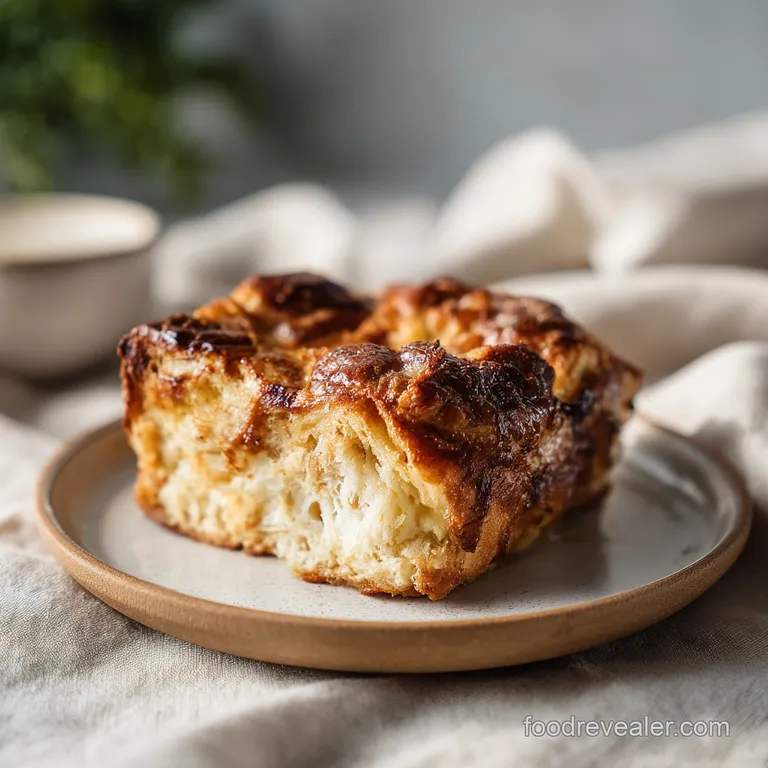
- Time: Active 15 minutes, Passive 45 minutes, Total 1 hours
- Flavor/Texture Hook: Buttery, vanilla laced custard with a golden, crackling sugar crust
- Perfect for: Festive holiday brunches, birthday celebrations, or upscale weekend hosting
- Celebrate the Weekend with This French Toast Casserole
- The Science of the Custard Hydration
- Planning Your Grand Weekend Brunch Recipe Specifications
- Selecting Premium Elements for a Sophisticated Texture
- Essential Kitchen Tools for Effortless Brunch Hosting
- Step by Step Guide to a Golden Bake
- Navigating Common Baking Hurdles for a Flawless Result
- Creative Flavor Twists and Smart Ingredient Swaps
- Maintaining Freshness and Reducing Kitchen Food Waste
- Designing a Visual Masterpiece with Color Balance
- Recipe FAQs
- 📝 Recipe Card
Celebrate the Weekend with This French Toast Casserole
Imagine waking up to the intoxicating aroma of warm vanilla bean paste and toasted cinnamon swirling through the hallways. There is no frantic flipping at the stove or cold slices of bread waiting for their turn in the pan.
Instead, you're sipping a crisp mimosa while the oven does the heavy lifting, turning a simple tray of brioche into a golden, puffed work of art. I first made this for a New Year's Day brunch when I was too tired to stand over a griddle, and honestly, I have never looked back.
The way the heavy cream and eggs meld into the bread creates a texture that is almost like a bread pudding but with the structured bite of a classic breakfast.
We have all been there, staring at a plate of soggy, limp bread that was supposed to be a treat. That usually happens because the bread was too fresh or the custard ratio was off. But this version? It is designed for hosting.
We use rich, buttery brioche because it has the structural integrity to soak up every drop of that vanilla custard without falling apart. It is about creating a moment of luxury that feels effortless.
Whether you are serving a crowd or just treating yourself to a slow Sunday, this dish is the centerpiece that makes the morning feel special.
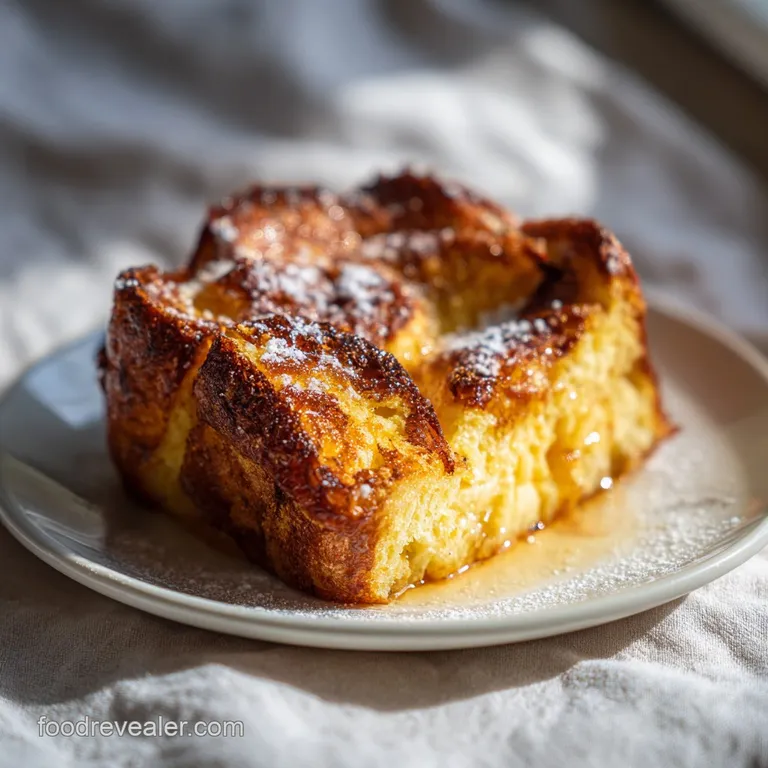
Getting the texture right is the secret to a successful brunch. We want that distinct contrast between the soft, pillowy middle and the crunchy, sugary lid. When you pull this out of the oven, the edges should be browned and crisp, while the center remains slightly wobbly and rich.
Trust me, once you see your guests reaching for second helpings before the first tray is even cold, you will realize why this has become my go to celebration staple. Let’s get into the details of how to make this happen in your own kitchen.
The Science of the Custard Hydration
Starch Retrogradation: Using stale or toasted bread allows the starch molecules to dehydrate, creating "micro pockets" that can hold more custard without the bread becoming mushy.
Protein Coagulation: The specific ratio of 8 eggs to 2.5 cups of dairy ensures the proteins set firmly enough to slice while maintaining a creamy, melt in-the mouth feel.
Planning Your Grand Weekend Brunch Recipe Specifications
When hosting a crowd, knowing exactly how much to prepare is the difference between a relaxed morning and a kitchen crisis. This table helps you scale your celebration perfectly based on your guest list.
| Servings | Ingredient Adjustments | Pan Size | Cook Time |
|---|---|---|---|
| 4 Guests | Half all ingredients (4 eggs, 1/4 cup butter) | 8x8 square | 35 minutes |
| 8 Guests | Standard recipe (1 lb bread, 8 eggs) | 9x13 rectangular | 45 minutes |
| 12 Guests | 1.5x ingredients (1.5 lbs bread, 12 eggs) | Two 9x13 pans | 50 minutes |
While this casserole is the star of the show, a well rounded brunch often needs a savory counterpoint to balance the sweetness. If you are looking for a hearty addition to your spread, consider serving this alongside a savory Salisbury Steak w/ recipe for a mid day meal that satisfies every craving. The rich mushroom gravy provides a wonderful earthy contrast to the vanilla and cinnamon notes of the toast.
Selecting Premium Elements for a Sophisticated Texture
The quality of your ingredients directly dictates the final "wow" factor of this dish. While you can use standard white bread, the brioche provides a fat content that makes the result significantly more decadent and celebratory.
| Component | Science Role | Pro Secret |
|---|---|---|
| Brioche Bread | High fat crumb structure | Slice it into 1 inch cubes the night before to air dry |
| Vanilla Bean Paste | Flavor depth and visual appeal | The tiny black specks signal a premium, high end dish |
| Heavy Cream | Fat emulsification | Don't swap for skim; the fat prevents the eggs from curdling |
| Unsalted Butter | Maillard reaction | Melt and toss with sugar for that "shatter" crust effect |
Choosing the right bread is the most important decision you'll make here. A standard loaf of sandwich bread simply doesn't have the "backbone" to stand up to an overnight soak. For another example of how the right starch makes or breaks a meal, look at how the noodles interact with the sauce in a classic Beef Stroganoff in recipe. Just as those wide ribbons hold onto the creamy sauce, our brioche cubes act like sponges for the vanilla custard.
The Ingredients List
- 1 lb brioche bread: Cut into 1 inch cubes. Why this? Brioche has the highest egg to flour ratio, making it incredibly rich.
- 8 large eggs: Room temperature. Why this? They provide the structure and "lift" for the casserole.
- 2 cups whole milk: Full fat is best. Why this? Provides the base hydration for the custard.
- 1/2 cup heavy cream: For richness. Why this? Adds a velvety mouthfeel that milk alone cannot achieve.
- 3/4 cup granulated sugar: For the custard. Why this? Sweetens the base and helps with browning.
- 2 tbsp vanilla bean paste: high-quality. Why this? Offers a more intense, floral flavor than standard extract.
- 1 tsp ground cinnamon: For the custard. Why this? Adds warmth and a classic breakfast aroma.
- 1/4 tsp ground nutmeg: Freshly grated if possible. Why this? Enhances the "eggy" richness of the custard.
- 1/4 tsp salt: Fine sea salt. Why this? Balances the sugar and makes the flavors "pop."
- 1/2 cup unsalted butter: Melted. Why this? The fat source for the crunchy topping.
- 1/2 cup light brown sugar: Packed. Why this? Creates a molasses like caramelization on top.
- 1 tsp ground cinnamon: For the topping. Why this? Double layering the spice ensures it's the dominant aroma.
Essential Kitchen Tools for Effortless Brunch Hosting
You don't need a professional kitchen to pull off this easy french toast casserole recipe, but a few specific tools make the process much smoother. A large glass or ceramic 9x13 inch baking dish is your best friend here because it distributes heat evenly and looks beautiful on the table.
For the custard, a large balloon whisk is essential to ensure the eggs and dairy are fully emulsified; you don't want any "fried egg" streaks in your bake.
Chef Tip: Freeze your butter for 10 minutes before melting it for the topping. It sounds counterintuitive, but chilled butter that is quickly melted and mixed with sugar creates a more distinct, crumbly texture rather than a greasy liquid.
Finally,, a high-quality serrated knife is non negotiable for cubing the brioche. A dull blade will squish the delicate bread rather than slicing it cleanly. We want those 1 inch cubes to have sharp edges so they can create those lovely little peaks that get extra crispy in the oven. If you find yourself enjoying these types of "set it and forget it" dishes, you might also love the convenience of a Mississippi Pot Roast recipe, which uses similar low and slow logic to create a tender, crowd pleasing main.
step-by-step Guide to a Golden Bake
- Prepare the bread. Cut the brioche into 1 inch cubes and spread them on a baking sheet to dry for 2 hours or overnight. Note: Dry bread absorbs custard more efficiently than fresh bread.
- Grease the dish. Use a generous amount of butter to coat a 9x13 inch baking pan. Note: This prevents sticking and adds flavor to the bottom crust.
- Whisk the eggs. Beat the 8 large eggs in a large bowl until no streaks of yellow or white remain.
- Incorporate the dairy. Slowly whisk in the 2 cups of milk and 1/2 cup of heavy cream.
- Season the custard. Stir in the 3/4 cup granulated sugar, 2 tbsp vanilla bean paste, 1 tsp cinnamon, nutmeg, and salt.
- Assemble the layers. Place the bread cubes in the prepared dish and pour the custard over them evenly.
- Compress the bread. Use your hands or a spatula to gently press the bread down into the liquid.
- Chill and soak. Cover with foil and refrigerate for at least 4 hours, though overnight is the gold standard for this French Toast Casserole.
- Prepare the topping. Mix the 1/2 cup melted butter with 1/2 cup brown sugar and the remaining 1 tsp cinnamon.
- Bake until golden. Remove the foil, drizzle the topping over the bread, and bake at 350°F (180°C) for 45 minutes until the top is crackling and the center is set.
Navigating Common Baking Hurdles for a Flawless Result
The biggest fear with any baked custard dish is ending up with something that is either dry as a bone or soggy like a sponge. If you notice the top is browning too quickly while the middle is still liquid, simply tent a piece of foil over the dish for the last 15 minutes.
This allows the internal temperature to rise without burning the delicate sugar crust.
Ensuring a Firm Center
If your casserole feels too soft in the middle, it is likely because the bread cubes were too large or too fresh. Smaller, drier cubes create more surface area for the eggs to grab onto, leading to a more consistent set.
Always check the center with a knife; it should come out clean, and the bread should feel springy, not wet.
| Problem | Root Cause | Solution |
|---|---|---|
| Soggy bottom | Bread was too fresh/soft | Toast cubes at 300°F for 10 mins before soaking |
| Burnt topping | Sugar caramelized too fast | Tent with foil at the 30 minute mark |
| Rubbery texture | Too many eggs or overbaked | Use large eggs (not jumbo) and check at 40 mins |
Common Mistakes Checklist
- ✓ Never use low-fat or skim milk; the lack of fat will cause the custard to separate.
- ✓ Ensure every cube of bread is at least partially submerged in the custard during the soak.
- ✓ Don't skip the "resting" period; the bread needs time to pull the moisture into its core.
- ✓ Preheat your oven fully for 20 minutes to ensure a consistent rise and even browning.
- ✓ Avoid over mixing the topping; you want little clumps of cinnamon sugar for the best texture.
Creative Flavor Twists and Smart Ingredient Swaps
One of the reasons I love this best french toast casserole recipe is how adaptable it is for different celebrations. If you are hosting a summer brunch, adding a handful of fresh fruit can transform the profile entirely.
A blueberry french toast casserole is a classic for a reason the berries burst during baking, creating little pockets of tart jam that cut through the richness of the brioche.
| Original Ingredient | Substitute | Why It Works |
|---|---|---|
| Brioche Bread | Challah | Similar high egg content and sturdy structure |
| Whole Milk | Oat Milk (full fat) | High protein content helps the custard set similarly |
| Vanilla Bean Paste | Maple Syrup | Adds a woodsy sweetness. Note: Will result in a darker color |
When scaling this recipe up for a massive holiday gathering, like an easy christmas breakfast casserole, I recommend doubling the cinnamon but only increasing the salt by half. This prevents the dish from tasting overly seasoned.
If you're doubling the recipe, use two separate 9x13 pans rather than one giant deep pan; this ensures the middle cooks through at the same rate as the edges.
Maintaining Freshness and Reducing Kitchen Food Waste
If you find yourself with leftovers though in my house, that is a rare occurrence this casserole keeps surprisingly well. Store it in an airtight container in the fridge for up to 3 days. To reheat, avoid the microwave if possible, as it can make the bread rubbery.
Instead, pop a slice back into a 350°F oven for 10 minutes to revive that "shatter" crust.
For zero waste enthusiasts, don't throw away the crusts or small crumbs from the bottom of your brioche bag. You can toast those scraps and use them as a "crunchy gravel" topping for yogurt or even blend them into a thickener for creamy soups.
If you have extra custard liquid that didn't fit in the pan, whisk it into your morning coffee or use it to make a small batch of bread pudding in a mug.
Designing a Visual Masterpiece with Color Balance
A celebratory dish should look as good as it tastes. Since this casserole is largely shades of gold and brown, we use a garnish strategy to bring it to life. We focus on three specific color accents to make the presentation pop. Add these right before serving to keep them looking fresh and vibrant.
First, we need Red. Fresh raspberries or sliced strawberries provide a sharp, acidic contrast to the buttery brioche. Scatter them across the top of the dish as soon as it comes out of the oven. Second, we introduce Green.
A few sprigs of fresh mint or a very light dusting of lime zest adds a sophisticated, botanical look. Finally, we finish with White. A heavy dusting of powdered sugar over the top mimics a light snowfall and fills in the gaps between the golden cubes.
| Feature | Stovetop Method | Oven Casserole Method |
|---|---|---|
| Texture | Evenly soft with fried edges | Contrasting velvety middle and crunchy top |
| Effort | High (flipping individual slices) | Low (one pan assembly) |
| Hosting | Difficult (serve in batches) | Ideal (serve everyone at once) |
The contrast between the "shatter" of the sugar topping and the silky interior is what defines this dish. When you present it at the table, the visual of the red berries against the white sugar and the golden bread creates an immediate sense of occasion.
It's these small presentation touches the creative mimosas on the side, the fresh fruit, the linen napkins that turn a simple breakfast into a true weekend celebration. Trust me, once you master this french toast bake overnight technique, you'll find every excuse to host a brunch.
It's just too good not to share.

Recipe FAQs
What is a French toast casserole?
It is a baked, overnight bread pudding style breakfast. It uses cubed, custard soaked bread baked in a single dish to achieve a soft interior and a crisp, caramelized top layer.
How do you keep French toast casserole from getting soggy?
Use stale or slightly dried bread, like brioche, and ensure a long overnight soak. Stale bread creates micro pockets that absorb the custard fully without collapsing into mush when baked.
What's the secret to fluffy French toast?
The secret is using high fat dairy and allowing the bread to fully hydrate without over whisking the eggs. Heavy cream adds necessary fat, and you must press the bread down firmly so every cube soaks evenly.
What are common mistakes when making French toast casserole?
Common mistakes include using bread that is too fresh or overbaking the final product. If the bread is fresh, it will turn mushy; if overbaked, the custard protein will seize, making the texture rubbery instead of velvety.
How long should I soak the bread cubes in the custard?
Soak the bread for a minimum of four hours, but overnight refrigeration is highly recommended. This extended time allows the starch molecules to fully absorb the liquid uniformly throughout the entire dish.
Can I use regular sandwich bread instead of brioche?
No, stick to rich breads like brioche or challah for the best result. Standard sandwich bread lacks the necessary fat and structure, which causes it to break down and become a heavy, watery layer at the bottom of the pan.
How do I create the signature crunchy topping?
Mix melted butter with brown sugar and cinnamon, then drizzle evenly over the soaked bread before baking. The sugar caramelizes under the dry heat of the oven, forming a crackling, buttery crust.
Brioche French Toast Bake
Ingredients:
Instructions:
Nutrition Facts:
| Calories | 554 calories |
|---|---|
| Protein | 14 g |
| Fat | 31 g |
| Carbs | 58 g |
| Fiber | 1 g |
| Sugar | 40 g |
| Sodium | 235 mg |
