Classic Bruschetta: Fresh and Crispy
- Time: Active 10 minutes, Passive 5 minutes, Total 15 minutes
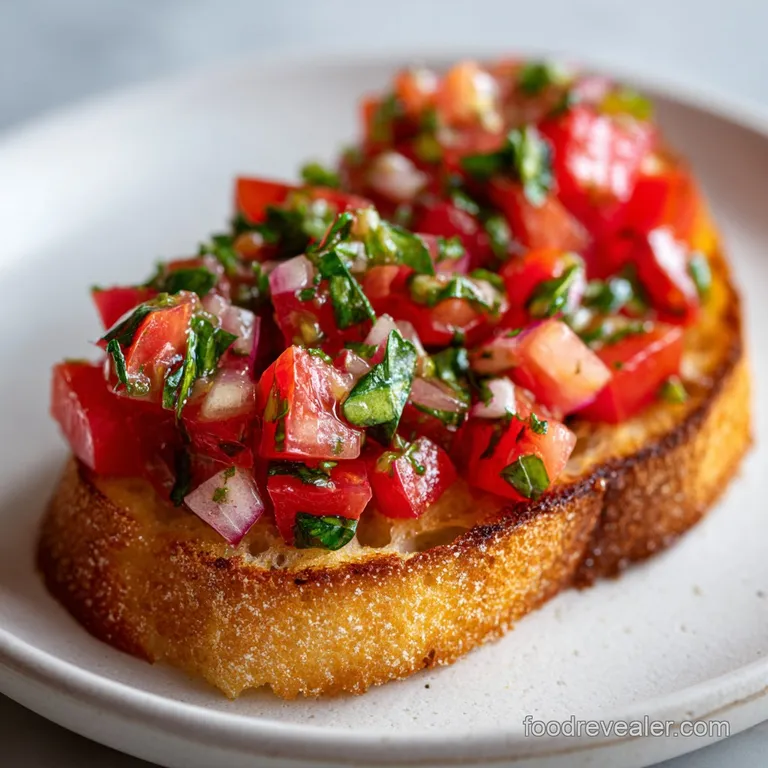
- Flavor/Texture Hook: Shatter crisp bread topped with velvety, garlic infused tomatoes
- Perfect for: Summer dinner parties or quick Italian style appetizers
Essential Recipe Timing and Specs
Before we start chopping, we need a plan. The beauty of this dish is that it only takes 15 minutes total, but those 15 minutes are busy. You want to time the toasting of the bread so it’s still warm when the tomatoes have finished their quick marination.
If the bread sits too long, it loses that specific "oven fresh" crunch that makes the garlic rub so effective.
1. Osmosis Control
We use salt to pull excess water out of the tomatoes before they ever touch the bread. This prevents the dreaded "soggy toast" syndrome. By letting them sit for just 5 minutes in a colander, you ensure the topping is concentrated and punchy rather than watery.
2. The Garlic Friction Method
We don't mince the garlic into the tomatoes. Instead, we use the toasted bread like a piece of sandpaper. Rubbing a raw, halved clove onto the hot, rough surface of the baguette creates a thin, invisible layer of garlic oils that permeates every bite without being overwhelming.
3. Maillard Reaction Mastery
We use the broiler on high heat for a very short burst (1-2 minutes). This creates a dark mahogany crust on the edges while keeping the center of the bread slightly giving. It provides a structural foundation that can hold the weight of the tomatoes without snapping or sagging.
| Method | Time | Texture | Best For |
|---|---|---|---|
| Stovetop | 4 minutes | Irregular char marks | Smokey, rustic flavor |
| Broiler | 2 minutes | Uniform golden crunch | Large batches, consistency |
| Toaster Oven | 5 minutes | Even browning | Small servings, single snacks |
Choosing the right method depends on your kitchen setup, but the broiler is my go to for a crowd. It mimics the intense heat of traditional coals better than a standard bake setting. Just keep a close eye on it, because bread goes from golden to burnt in about ten seconds!
Sourcing the Best Ingredient Elements
You really want to hunt for the best Roma tomatoes for this classic bruschetta recipe. They have a lower water content than beefsteaks, which is exactly what we need for a tidy topping. Look for ones that are heavy for their size and have a deep red hue. If they feel like a tennis ball, they aren't ready.
They should have a slight "give" when you press them gently with your thumb.
| Component | Science Role | Pro Secret |
|---|---|---|
| Roma Tomatoes | Structural base | Seed them thoroughly to avoid a watery mess |
| Extra Virgin Olive Oil | Flavor carrier | Use "first cold press" for that peppery finish |
| French Baguette | Edible vessel | Slice on a bias to maximize the surface area |
| Balsamic Glaze | Acidic balance | Glaze is thicker than vinegar, so it stays put |
The bread choice is equally vital. A French baguette is classic because the diameter is perfect for two bite appetizers. Avoid soft "Italian" loaves found in plastic bags at the grocery store; they have too much moisture and will turn into a sponge.
You want a crusty loaf that gives you a bit of a workout when you slice it.
When it comes to the olive oil, this is the time to break out the "good stuff." In most cooking, the nuances of a high end oil disappear. Here, the oil is a primary flavor. A peppery Tuscan oil or a buttery Sicilian variety will completely change the profile of the finished dish. If you're feeling adventurous after mastering this, you might even try serving it alongside some Southern Homemade Biscuits for a fusion brunch spread, though the baguette remains the gold standard for authentic crunch.
Necessary Tools for Toasty Success
You don't need a high tech kitchen for this, but a couple of specific tools make the job much cleaner. A serrated bread knife is non negotiable. If you try to use a straight edge chef’s knife, you’ll end up squishing the bread rather than slicing it cleanly.
You want those 1/2 inch rounds to be uniform so they toast at the same rate.
A large rimmed baking sheet is the best way to handle the bread. It allows for airflow and gives you enough room to flip the slices quickly. I also highly recommend using a stainless steel colander. Plastic ones are fine, but steel stays colder and feels more precise when you're draining the tomatoes over a bowl.
Finally,, a pastry brush is a lifesaver. Instead of drizzling oil and hoping for the best, brushing both sides of the bread ensures every millimeter of the surface gets that fat. This creates a waterproof barrier that protects the bread from the tomato juices later on.
It's the little details like this that take a recipe from "okay" to "tasty."
step-by-step Assembly Guide
1. The Moisture Lock Prep
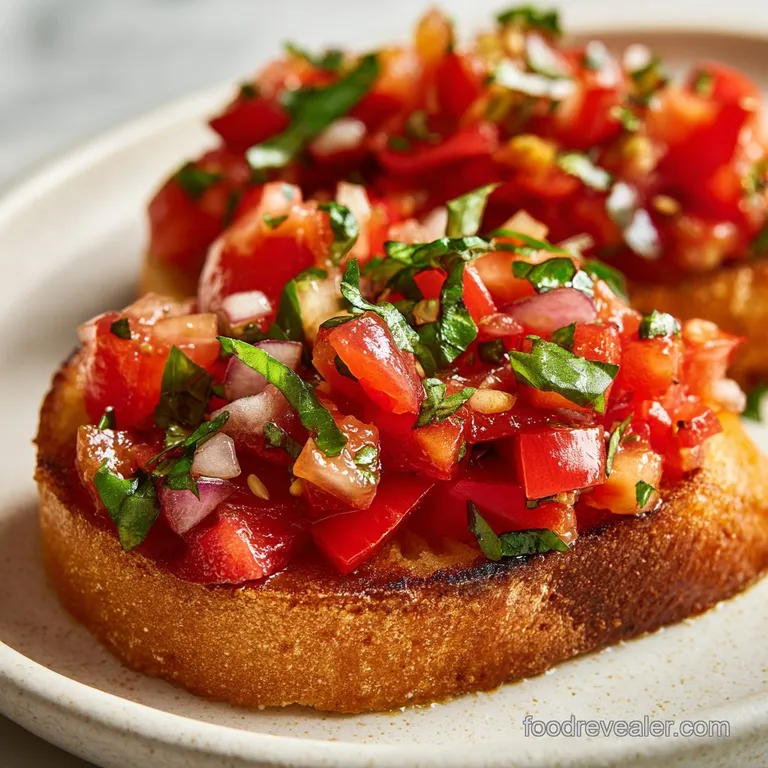
Start by dicing your 1.5 lbs of Roma tomatoes. Aim for a small, consistent dice about 1/4 inch. Place them into a colander set over a mixing bowl and sprinkle with a generous pinch of salt.
Note: This draws out the internal juices so the bread stays crisp. Let them sit for about 10 minutes while you prep the bread.
2. The over High heat Toasting Phase
Preheat your broiler to high. Slice the baguette into 1/2 inch thick rounds on a bias. Using your 1/3 cup of olive oil, brush both sides of every slice. Note: Fat conducts heat and creates that golden crust. Arrange them on the baking sheet and slide them under the broiler for 1-2 minutes per side.
You are looking for edges that are dark mahogany and a surface that feels like a cracker.
3. The Aromatic Assembly
As soon as the bread comes out, take your halved garlic cloves and rub the cut side firmly against the top of each toast. The heat will melt the garlic right into the crumb. In a separate bowl, toss the drained tomatoes with 1/2 cup chiffonade basil, 2 tablespoons of oil, 1 tablespoon of balsamic glaze, and 1/4 teaspoon of black pepper.
Spoon the mixture generously onto the garlic rubbed side of the toasts. Finish each one with a light sprinkle of flaky sea salt. The contrast between the cold tomatoes and the warm bread is what makes this classic bruschetta recipe a winner every single time.
Chef's Tip: Freeze your garlic for 10 minutes before peeling. It makes the skin snap right off and keeps the juices from oxidizing too quickly, giving you a cleaner flavor.
| Original Ingredient | Substitute | Why It Works |
|---|---|---|
| Balsamic Glaze | Honey + Red Wine Vinegar | Mimics the sweet/tart balance. Note: Will be thinner than glaze. |
| Roma Tomatoes | Cherry Tomatoes | Higher sugar content. Note: Skin to flesh ratio is higher, adding more "pop." |
| French Baguette | Sourdough Loaf | Adds a tangy fermented note. Note: Slices will be much larger; cut in half. |
One thing I've learned from kitchen chaos is that you should never dress the tomatoes too early. If they sit in the oil and balsamic for more than 20 minutes, the basil will start to turn black and slimy. Keep the components separate until you are ready to serve.
This is the secret to that vibrant, fresh look you see in high end Italian spots.
Fixes for Common Topping Issues
The biggest complaint with bruschetta is always sogginess. If your bread is getting soft before it even reaches the table, you likely skipped the salting step or your bread wasn't toasted hard enough. The bread needs to be "shatter crisp" it should almost be difficult to bite through on its own.
1. Bread is Too Hard
If the bread feels like a rock and hurts the roof of your mouth, you might have sliced it too thin or broiled it for too long at a lower temperature. The goal is a quick sear. If it's already too hard, try adding a tiny bit more olive oil to the tomato mix; the oil will slightly soften the very top layer of the crumb without making it mushy.
2. Muted Tomato Flavor
Sometimes winter tomatoes just don't have that punch. If your mix tastes "flat," add a tiny pinch of sugar and an extra drop of balsamic glaze. The sugar mimics the natural sweetness of peak summer tomatoes and brings the whole bite to life.
| Problem | Root Cause | Solution |
|---|---|---|
| Soggy Bread | Excess tomato water | Salt tomatoes in a colander for 10 minutes |
| Burnt Garlic Taste | Rubbing too hard | Use a lighter touch; the bread shouldn't turn white |
| Bland Topping | Under seasoning | Add flaky salt only at the very final second |
Common Mistakes Checklist
- ✓ Forgetting to seed the tomatoes (the seeds hold 80% of the water)
- ✓ Using "light" olive oil (it has no flavor for this application)
- ✓ Crowding the baking sheet (prevents even browning)
- ✓ Adding the basil more than 5 minutes before serving (it wilts and oxidizes)
- ✓ Using cold bread (garlic won't melt into the surface)
Flavor Variations and Easy Subs
While the classic bruschetta recipe is a masterpiece of minimalism, there are times when you want to shake things up. One of my favorite "cheats" is to add a thin layer of ricotta cheese under the tomatoes. This adds a creamy, velvety texture that contrasts beautifully with the crunch of the bread.
1. The Creamy Upgrade
Spread a teaspoon of whole milk ricotta or goat cheese onto the garlic rubbed toast before adding the tomato mixture. It acts as an additional moisture barrier and adds a richness that makes the appetizer feel more like a light meal.
2. The Vegan Friendly Swap
This recipe is naturally vegan if you omit the cheese, but you can enhance the "umami" by adding finely chopped Kalamata olives or a teaspoon of capers to the tomato mix. It provides a salty, briny kick that replaces the need for any dairy.
If you find yourself with extra tomatoes and basil, they make a fantastic side for a Best Homemade Guacamole spread during a multi cultural snack night. Both rely on fresh aromatics and high-quality produce, making them natural cousins on a party platter.
When scaling this recipe up for a big party, don't try to toast all the bread at once unless you have a commercial sized oven. Work in batches. You can dice the tomatoes and store them in the fridge (undressed!) up to 4 hours in advance.
Just don't add the oil, salt, or basil until you're ready to assemble.
| Servings | Baguette Count | Tomato Weight | Prep Time |
|---|---|---|---|
| 6 people | 1/2 loaf | 0.75 lbs | 10 minutes |
| 12 people | 1 large loaf | 1.5 lbs | 10 minutes |
| 24 people | 2 large loaves | 3.0 lbs | 15 minutes |
Preservation Secrets
Bruschetta is famously poor at being a leftover. Once the tomatoes sit on the bread, the clock starts ticking. However, you can save the components! If you have leftover tomato topping, don't throw it away. It makes an incredible "instant" pasta sauce.
Just toss it with hot spaghetti and a little extra splash of olive oil.
Store the tomato mixture in an airtight container in the fridge for up to 2 days. The basil will darken, but the flavor will actually deepen as the garlic and balsamic meld. Just be sure to drain off any new liquid that accumulates before using it again.
The toasted bread can be kept in a zip top bag at room temperature for about 24 hours. If it loses its crunch, just pop it back under the broiler for 30 seconds to wake up the oils. Never freeze the assembled bruschetta; the tomatoes will turn to mush and the bread will become a soggy disaster.
For a zero waste tip: take the ends of the baguette that were too small to toast and pulse them in a food processor. Since they are already brushed with oil and garlic rubbed, they make the most incredible homemade breadcrumbs you've ever tasted.
Sprinkle them over a salad or a tray of roasted vegetables for a punch of flavor.
Best Ways to Serve Bruschetta
Presentation is half the battle with a classic bruschetta recipe. I love serving these on a large wooden board or a slate platter to lean into that rustic, Italian vibe. Don't line them up like soldiers; scatter them slightly and garnish the whole board with extra sprigs of fresh basil.
It signals to your guests that this is fresh and handmade.
If you’re serving this as part of a larger meal, it pairs beautifully with grilled meats or a light white wine like a Pinot Grigio or a crisp Sauvignon Blanc. The acidity in the wine cuts through the richness of the olive oil perfectly.
Decision Shortcut
- If you want extra crunch, double toast the bread for 45 seconds per side after rubbing the garlic.
- If you want more sweetness, increase the balsamic glaze to 2 tablespoons and let the tomatoes sit for an extra 5 minutes.
- If you want heat, add a pinch of dried red chili flakes to the tomato mixing bowl.
One myth I have to debunk is that you need "vinegar" in bruschetta. Traditionally, it was just oil, salt, and garlic. The balsamic glaze we use in this version is a modern addition that helps bridge the gap between the tomatoes and the bread, but don't feel like it's a failure if you leave it out.
The Maillard reaction on the bread and the natural sugars in the tomatoes provide plenty of complexity on their own.
Trust your senses while you cook. If the bread smells like it's starting to char, it's done. If the tomatoes look too pale, add more basil for color. This is the kind of cooking that makes you feel connected to the ingredients.
Once you've mastered this, you'll never look at a grocery store appetizer the same way again. Right then, let's get those tomatoes dicing you're going to love how this turns out.
Recipe FAQs
What is the secret to a great bruschetta?
The secret is removing excess moisture from your tomatoes. By seeding the tomatoes and letting them drain in a colander for 5-10 minutes, you prevent the bread from becoming soggy.
What is in traditional bruschetta?
Traditional bruschetta relies on a short list of high-quality staples. It features a French baguette, extra virgin olive oil, fresh garlic cloves, seeded Roma tomatoes, fresh basil, balsamic glaze, flaky sea salt, and cracked black pepper.
How to make proper bruschetta?
Preheat your broiler to high and slice the baguette into 1/2 inch rounds. Brush both sides with olive oil and toast for 1-2 minutes per side until dark mahogany, then rub with raw garlic while the bread is still warm to infuse the flavor.
What is the secret ingredient in bruschetta?
Balsamic glaze is the key component that balances the acidity of the tomatoes. If you enjoyed mastering the flavor balancing technique used here, you can see how similar acidic profiles work in our BLT wrap secret sauce.
Is it true I should add basil to the tomato mixture as early as possible?
No, this is a common misconception. You must add the fresh basil no more than 5 minutes before serving, otherwise, the leaves will wilt and oxidize, losing their vibrant color and fresh aroma.
How to keep the bread from getting soft after topping?
Serve the bruschetta immediately after assembling. Because the tomato mixture contains moisture, the longer it sits on the toasted bread, the softer the texture becomes.
How to ensure the garlic flavor is strong enough?
Rub the cut side of a halved garlic clove vigorously across the hot, toasted surface of the bread. The heat from the toast melts the garlic essential oils directly into the crust, creating a much more aromatic result than using minced garlic.
Classic Tomato Bruschetta
Ingredients:
Instructions:
Nutrition Facts:
| Calories | 191 calories |
|---|---|
| Protein | 3.9 g |
| Fat | 9.7 g |
| Carbs | 22.8 g |
| Fiber | 1.2 g |
| Sugar | 2.1 g |
| Sodium | 218 mg |
