Creamy Scalloped Potatoes: Velvety & Garlic Scented
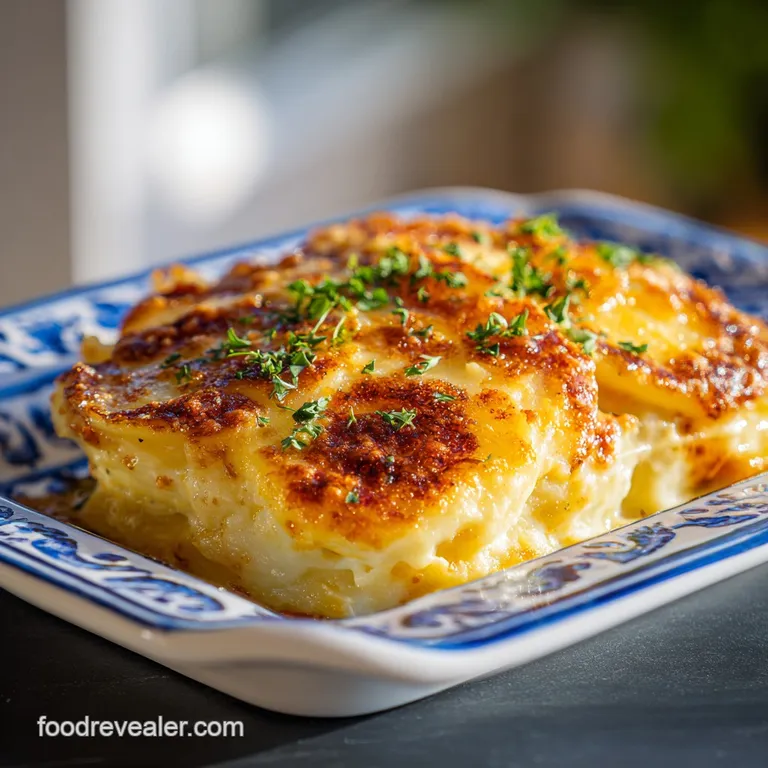
- Time: Active 20 minutes, Passive 1 hours 15 mins, Total 1 hours 35 mins
- Flavor/Texture Hook: Velvety, garlic scented layers with a shatter crisp cheese crust.
- Perfect for: Stress free family dinners or a soul satisfying holiday spread.
- Create the Best Creamy Scalloped Potatoes
- Why This Classic Comfort Dish Wins
- Analyzing the Essential Dish Components
- Tools for a Seamless Kitchen Workflow
- Step by Step Kitchen Execution
- Fixing Common Texture and Flavor Issues
- Making Simple Substitutions for Everyone
- Debunking Traditional Kitchen Wisdom
- Keeping Your Leftovers Fresh and Tasty
- Pairing Ideas for a Complete Meal
- Creamy Scalloped Potatoes FAQs
- 📝 Recipe Card
Create the Best Creamy Scalloped Potatoes
Picture this: it is a rainy Sunday afternoon, and the kitchen is filled with the warm, earthy scent of garlic simmering in heavy cream. There is a specific sound when you pull this dish out of the oven that rhythmic, frantic sizzle of cream bubbling against the ceramic edges while the cheese topping crackles as it hits the cooler air.
It is the kind of aroma that makes everyone wander into the kitchen without being called.
I used to think that making this dish was just about stacking spuds and pouring milk over them, but I learned the hard way that leaden, crunchy potatoes are a real mood killer. After a few "crunchy" disasters that I had to apologize for, I finally figured out the balance of dairy and starch that actually works.
We are going for a texture that feels like silk but still holds its shape when you slide a spatula through the layers.
We’re skipping the flour heavy roux today because the potatoes themselves carry all the thickening power we need. This version is all about the pure, comforting flavors of Gruyère and nutmeg.
It’s a total comfort classic that has saved many of my midweek dinners from being boring, and honestly, you might find yourself eating the leftovers straight from the fridge at midnight.
Why This Classic Comfort Dish Wins
- Amylopectin Release: Slicing the Yukon Golds thinly exposes more surface area, allowing the starch to thicken the cream naturally without needing a flour roux.
- Fat Saturation: The ratio of heavy cream to whole milk ensures the sauce is rich enough to coat the palate but light enough to soak into the potato centers.
- Maillard Reaction: Using Gruyère provides the proteins and sugars needed to create that deep golden, umami rich crust that shatters under a fork.
- Enzymatic Control: Adding salt directly to the cream mixture rather than just the layers ensures the seasoning penetrates every single slice during the long bake.
| Method | Time | Texture | Best For |
|---|---|---|---|
| Oven Bake | 1 hours 15 mins | Crispy edges, tender core | Sunday dinners |
| Stovetop Start | 45 minutes | Uniformly soft, no crust | Quick weeknight meals |
| Slow Cooker | 4 hours | Extremely soft, very moist | Potluck transport |
The oven bake is the gold standard because it allows the top layer to dehydrate and brown while the bottom layers braise in the dairy. If you find yourself in a rush, starting the simmer on the stove for 10 minutes before moving to the oven can shave about 20 minutes off the total time.
Analyzing the Essential Dish Components
| Ingredient | Science Role | Pro Secret |
|---|---|---|
| Yukon Gold Potatoes | High starch, medium moisture | Do not rinse after slicing; you need that surface starch to bind the sauce. |
| Heavy Cream | Emulsion stability | Use room temp cream to prevent the dairy from "breaking" or curdling in the high heat. |
| Gruyère Cheese | Flavor and structure | Grate your own from a block; pre shredded cheese is coated in starch that ruins the melt. |
| Fresh Nutmeg | Aromatic bridge | Just a tiny grate links the earthy potato flavor to the sweet notes of the cream. |
Tools for a Seamless Kitchen Workflow
You really need a mandoline for this one. I know, they’re intimidating, but trying to cut 3 lbs of potatoes into uniform 1/8 inch slices with a knife is a recipe for a sore wrist and unevenly cooked potatoes. If you use one, please use the guard!
Aside from that, a heavy bottomed saucepan for the cream infusion and a deep 9x13 inch ceramic baking dish are your best friends here.
Chef's Tip: Rub a halved garlic clove all over the inside of your baking dish before adding the potatoes. It leaves a ghostly, subtle garlic essence that permeates the bottom layer without the bite of raw pieces.
step-by-step Kitchen Execution
- Infuse the dairy. Combine 1.5 cups heavy cream, 1 cup whole milk, 3 minced garlic cloves, 1 tbsp chopped thyme, and 1/2 tsp nutmeg in a saucepan.
- Heat gently. Bring the mixture to a bare simmer over medium low heat until small bubbles form at the edges, then remove from heat. Note: This infuses the flavors without scorching the milk.
- Prepare the potatoes. Peel and slice 3 lbs Yukon Gold potatoes into 1/8 inch rounds.
- Season the base. Toss the slices in a large bowl with 1 tsp sea salt and 1/2 tsp black pepper until every slice looks glistening.
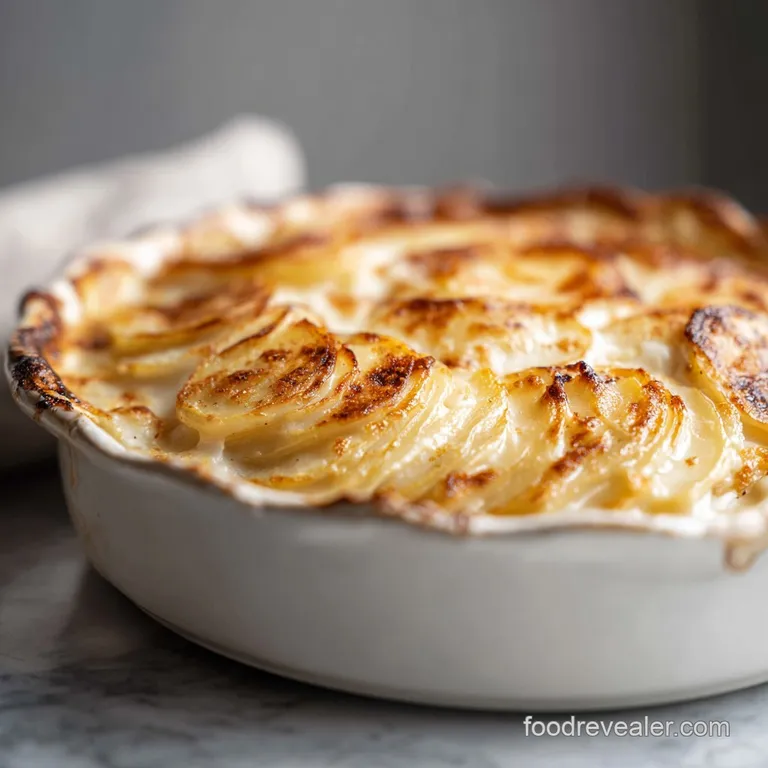
- Layer the dish. Arrange half the potato slices in your prepared baking dish, overlapping slightly like shingles.
- Add the liquid. Pour half of the warm cream mixture over the first layer.
- Repeat and finish. Layer the remaining potatoes, pour the rest of the cream, and top with 1.5 cups shredded Gruyère.
- Execute the bake. Cover with foil and bake at 350°F (180°C) for 45 minutes.
- Brown the top. Remove foil and bake for another 30 minutes until the cheese is deep golden and the sauce is frantically bubbling.
- Set the stage. Let the dish rest for 15 minutes before serving. Note: This allows the starches to fully set so the sauce doesn't run.
Fixing Common Texture and Flavor Issues
Why Your Potatoes Stayed Hard
If you pull the dish out and the centers are still crunchy, it usually comes down to the potato type or the slice thickness. Russets can sometimes stay firm if the liquid isn't hot enough, but with Yukon Golds, it's usually because the slices were thicker than 1/8 inch.
| Problem | Root Cause | Solution |
|---|---|---|
| Curdled Sauce | Oven too hot or low-fat milk | Bake at 350°F and use full fat heavy cream and whole milk. |
| Soggy Bottoms | Too much liquid/not enough starch | Use Yukon Golds and don't rinse the slices after cutting. |
| Greasy Surface | Cheese broke down | Add cheese in the last 20 mins of baking instead of at the start. |
If you love these textures, you should definitely try pairing this with my Creamy Chicken Adobo recipe for a meal that truly satisfies the soul.
Common Mistakes Checklist
- ✓ Never rinse your potatoes after slicing; the starch is your thickener.
- ✓ Ensure the cream is warm when it hits the potatoes to jumpstart the cooking.
- ✓ Cover tightly with foil for the first half to steam the potato centers.
- ✓ Let it rest! Slicing too early results in a liquid mess.
- ✓ Use a mandoline for uniform slices, or some will be mush while others are raw.
Making Simple Substitutions for Everyone
If you need to scale this down for a quiet night, you can easily halve the recipe and use an 8x8 inch pan. Just keep the potato thickness the same and reduce the total bake time by about 15 minutes.
When scaling up for a crowd, don't just double the salt start with 1.5x the amount and taste your cream mixture before pouring.
| Original Ingredient | Substitute | Why It Works |
|---|---|---|
| Heavy Cream | Full fat Coconut Milk | Similar fat content. Note: Adds a slight tropical nuttiness to the dish. |
| Gruyère | Sharp White Cheddar | High fat and great melt, though slightly more oily. |
| Fresh Thyme | Dried Thyme | Use 1/3 the amount. Note: Flavor is more concentrated and "dusty." |
If you're looking for a simpler potato side with a different flavor profile, my Roasted Potatoes with recipe is a fantastic, lighter alternative.
Debunking Traditional Kitchen Wisdom
A lot of people think you need to make a flour roux (a Béchamel) to get a thick sauce. That’s actually a myth for this specific dish. Because Yukon Golds are so starchy, the flour often makes the sauce feel pasty or "gluey." Let the potatoes do the work for you.
Another common misconception is that you have to boil the potatoes first. This actually leads to a waterlogged potato that can't absorb the seasoned cream. Raw, thin slices are the only way to get that perfectly integrated flavor.
Keeping Your Leftovers Fresh and Tasty
Storage: These keep beautifully in the fridge for up to 4 days. In fact, some people (me!) think they taste better the next day because the flavors have had time to truly mingle. Store them in an airtight container to keep them from picking up fridge odors.
Freezing: I don't recommend freezing this dish. The dairy tends to separate and the potatoes can become grainy when thawed. If you must, freeze it after it’s fully cooked and cooled, then reheat slowly in the oven.
Zero Waste: If you have leftover sauce at the bottom of the dish, don't toss it. It's essentially a garlic potato cream essence. Stir it into a batch of mashed potatoes the next day or use it as a base for a quick potato leek soup.
Pairing Ideas for a Complete Meal
These potatoes are quite rich, so they love a partner with a bit of acidity or a strong protein. A simple roasted chicken or a seared steak works wonders. If you want to keep the "comfort" theme going, serving this alongside a bright green salad with a lemon vinaigrette helps cut through the heavy cream.
- If you want a crunchier top: Mix 1/2 cup of Panko breadcrumbs with a little melted butter and sprinkle over the cheese.
- If you want more depth: Add a layer of sautéed leeks between the potato layers.
- If you want a smokier flavor: Swap the Gruyère for smoked gouda.
Trust me on the nutmeg it’s the secret ingredient that makes people ask, "What is that flavor?" It doesn't make it taste like dessert; it just makes the cream taste "creamier." Let's crack on and get those potatoes in the oven!

Creamy Scalloped Potatoes FAQs
Do you use cream in scalloped potatoes?
Yes, you must use heavy cream. Heavy cream provides the necessary high fat content to prevent the sauce from curdling under the oven's heat and ensures a velvety texture.
What is the one trick Michael Symon used to make perfect scalloped potatoes?
Simmer the potatoes briefly in the cream before baking. This helps soften the edges slightly and allows the starch to start binding the sauce immediately, preventing crunchy centers.
What are some common mistakes when making scalloped potatoes?
Rinsing the sliced potatoes is a common mistake. You need the surface starch from the raw slices to thicken the cream naturally; rinsing washes this crucial binding agent away.
Should potatoes be soaked in water before making scalloped potatoes?
No, do not soak them in water. Soaking leaches out the necessary surface starch required to thicken your sauce, resulting in a watery final product that won't set properly.
How do I prevent the cream sauce from turning grainy or curdled during baking?
Ensure your dairy is room temperature before layering and bake at a moderate 350°F. Rapid temperature changes cause milk proteins to seize; if you enjoyed mastering stable emulsion here, apply that slow temperature transition to this dish.
Can I use milk instead of heavy cream for scalloped potatoes?
No, using only milk will likely result in a soupy mess. Milk lacks the fat structure to support the starch, leading to a thin sauce; substitute half the heavy cream with whole milk for a slightly lighter version, not less than that.
What cheese works best for the golden crust on creamy scalloped potatoes?
Gruyère is the superior choice for its sharp flavor and excellent melting profile. For a side dish that needs this level of richness, you might also enjoy the depth of flavor achieved in our Garlic Butter Shrimp recipe, which relies on good melting fat.
Creamy Scalloped Potatoes
Ingredients:
Instructions:
Nutrition Facts:
| Calories | 381 kcal |
|---|---|
| Protein | 11.2 g |
| Fat | 23.2 g |
| Carbs | 31.7 g |
| Fiber | 3.8 g |
| Sugar | 3.1 g |
| Sodium | 425 mg |
