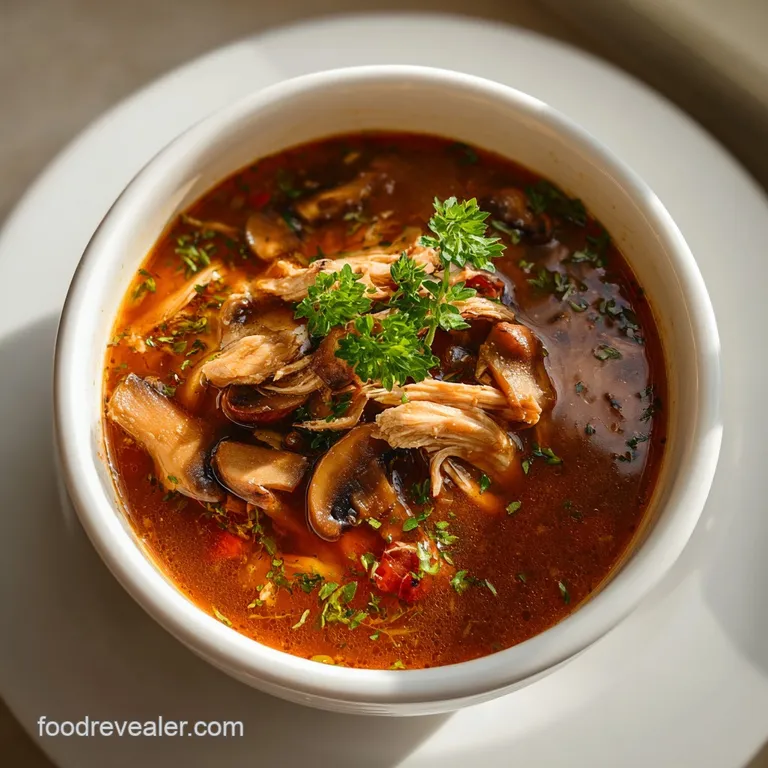
Rotisserie Chicken and Mushroom Soup
- Time: Active 15 minutes, Passive 15 minutes, Total 30 minutes
- Flavor/Texture Hook: Earthy, velvety, and deeply savory
- Perfect for: Chilly weeknight dinners and stress free family comfort
- Perfect Rotisserie Chicken and Mushroom Soup
- Flavor Layers Science and Texture
- Analyzing Each Hearty Soup Ingredient
- Choosing Your Soup Base Components
- Essential Tools for Better Soup
- Mastering the Silky Soup Method
- Avoiding Common Creamy Soup Errors
- Adapting This Recipe for Everyone
- Storing Your Leftover Chicken Soup
- Sides to Satisfy the Soul
- High in Sodium
- Recipe FAQs
- 📝 Recipe Card
Perfect Rotisserie Chicken and Mushroom Soup
The kitchen smells like rainy day magic when butter meets fresh thyme in a hot pan. I remember one Tuesday when I was staring at a half eaten grocery store bird, feeling completely uninspired. The meat was a bit dry, the skin wasn't crispy anymore, and I just wanted a hug in a bowl.
Warm up with this standout recipe: Fall Favorite Rotisserie Chicken and Mushroom Chicken Soup.
We’ve all been there, standing in front of the fridge with leftovers that look a bit sad. But that pre cooked chicken is actually a secret weapon for busy cooks. It has already been seasoned and roasted, meaning half the work is done for us.
When you shred that meat and let it simmer in a pot with thick cut Cremini mushrooms, something transformative happens. The chicken absorbs the earthy juices from the fungi, and the broth takes on a golden, silky quality that feels like it came from a high end bistro rather than a plastic container.
This isn't just a basic soup; it’s a masterclass in how to build flavor in stages. We start with a hot sear to get those mushrooms golden, then we soften the aromatics until they’re sweet, and finally, we tie it all together with a classic roux. You won't find any canned "cream of" anything here.
It’s all fresh, real, and designed to satisfy the soul after a long day. Expect a bowl that is thick enough to coat your spoon but light enough that you'll definitely want seconds.
Flavor Layers Science and Texture
Building a soup like this requires an understanding of how moisture and fat interact with protein and starch. To get that signature velvety finish without the soup becoming a heavy sludge, we have to respect the chemistry of the pot.
It is much more than just throwing ingredients into water; it is about controlled heat and the right order of operations.
The Physics of the Velvety Roux: The flour particles are coated in fat, which physically blocks the starch from clumping when it hits the hot broth. This creates a stable network that traps liquid, resulting in a thick, uniform texture that won't break or become grainy.
Maillard Reaction Mastery: Searing mushrooms until they turn deep chestnut brown creates complex sulfur compounds that mimic the savory qualities of meat. This ensures the broth has a deep, "meaty" backbone even before the chicken is added.
Collagen and Viscosity: Using a low sodium chicken bone broth provides a natural source of gelatin. This gives the liquid a "lip smacking" body and a richer mouthfeel than standard water based stocks can provide.
Acid and Umami Balance: While not in the primary list, the natural glutamates in mushrooms are amplified by the salt and the subtle fats in the heavy cream. This creates a rounded flavor profile that hits every part of the palate.
This velvety texture is even more satisfying than the one found in my Crockpot Potato Soup recipe, which relies more on starch from the potatoes themselves.
| Thickness | Internal Temp | Rest Time | Visual Cue |
|---|---|---|---|
| Thin Broth | 165°F | 0 mins | Rapid bubbles, clear liquid |
| Velvety Soup | 175°F | 5 mins | Slow, thick "blips" on surface |
| Hearty Stew | 185°F | 10 mins | Liquid heavily coats a metal spoon |
Analyzing Each Hearty Soup Ingredient
The success of and Mushroom Soup depends entirely on the quality of your base. Since we are using pre cooked chicken, the other elements have to work overtime to provide fresh, vibrant notes.
I always opt for Cremini mushrooms (often sold as "Baby Bellas") because they have a lower water content and a more intense flavor than white button mushrooms.
| Ingredient | Science Role | Pro Secret |
|---|---|---|
| 1 lb Cremini Mushrooms | Umami Source | Slice them thick (about 1/2 inch) so they don't disappear into the broth during the simmer. |
| 1/4 cup All purpose Flour | Thickening Agent | Cook the flour with the butter for at least 2 minutes to remove the raw cereal taste. |
| 4 cups Bone Broth | Liquid Base | Choose bone broth over standard stock for the added protein and natural gelatin body. |
Every component has a job. The carrots, celery, and onion (our classic mirepoix) provide the aromatic foundation. If you chop them into a small, uniform dice, they will soften at the same rate and distribute evenly in every spoonful.
The garlic goes in last because it’s delicate; if it burns, the whole pot will taste bitter, and no amount of cream can fix that.
Choosing Your Soup Base Components
Right then, let's look at what we are putting in the pot. We are using a mix of fresh produce and convenient pre cooked protein to save time without sacrificing quality. Trust me on this: the fresh thyme is non negotiable.
Dried thyme works in a pinch, but the floral, citrusy notes of the fresh leaves are what really makes this soup sing.
- 1 lb Cremini mushrooms, sliced thick: These provide the earthy "meat" of the soup. Substitute: Shiitake mushrooms for a more intense, forest like flavor.Why this? Creminis hold their shape better than white mushrooms when simmered.
- 3 tbsp Unsalted butter: Used to create the roux and sauté the veggies. Substitute: Ghee or clarified butter for a higher smoke point.
- 1 tbsp Extra virgin olive oil: Prevents the butter from burning during the over high heat mushroom sear. Substitute: Avocado oil.
- 2 tsp Fresh thyme leaves: The primary aromatic. Substitute: 1/2 tsp dried thyme, but rub it between your palms first.Why this? Thyme naturally complements the woodsy flavor of mushrooms.
- 1 medium Yellow onion, finely diced: Provides sweetness and depth. Substitute: Two large shallots for a milder, more refined taste.
- 2 medium Carrots, diced: Adds color and a subtle earthy sweetness. Substitute: Parsnips for a spicier, peppery note.
- 2 stalks Celery, diced: Essential for that classic savory "soup" smell. Substitute: A pinch of celery seed if you're out of fresh stalks.
- 4 cloves Garlic, minced: The soul of the savory profile. Substitute: 1 tsp garlic powder, added with the flour.
- 1/4 cup All purpose flour: Our thickener. Substitute: 2 tbsp cornstarch mixed with cold water (slurry) for a gluten-free version.
- 4 cups Low sodium chicken bone broth: The liquid gold. Substitute: Vegetable broth, though it will be less rich.
- 3 cups Rotisserie chicken meat, shredded or cubed: The star leftover. Substitute: Leftover roast turkey or even cooked pork loin.
- 1 cup Heavy cream: For that luxurious finish. Substitute: Full fat coconut milk (adds a slight nutty flavor).
- 1 tsp Sea salt: To wake up all the flavors. Substitute: Kosher salt (use 1.5 tsp).
- 1/2 tsp Cracked black pepper: For a gentle heat. Substitute: White pepper for a more subtle, floral spice.
- 1 tbsp Fresh parsley, chopped: A bright finish. Substitute: Fresh chives or green onions.
Essential Tools for Better Soup
You don't need a kitchen full of gadgets, but a few specific items will make your life much easier. I always reach for a heavy bottomed Dutch oven. The thick walls hold onto heat, which is vital when you’re trying to get a good sear on the mushrooms.
If you use a thin, cheap pot, the mushrooms will likely steam in their own juices instead of browning.
A sturdy wooden spoon is another must have. You'll be scraping the bottom of the pot (the "fond") after adding the broth, and a wooden spoon has the leverage to get all those tasty brown bits unstuck. For the veggies, a sharp chef's knife makes the dicing process therapeutic rather than a chore.
If you want a really fine mince on the garlic, a microplane or a dedicated garlic press works wonders. Finally, a good whisk is helpful when you first pour the broth into the flour mixture to ensure there are absolutely no lumps.
Mastering the Silky Soup Method

Layering flavors in this and Mushroom Soup is a rhythmic process. Don't rush the browning stages; that's where the character of the dish is built.
- Sauté the mushrooms. Heat the olive oil and 1 tbsp of butter in a large pot over medium high heat. Add the mushrooms in a single layer if possible. Cook for 5-7 minutes until they are browned and slightly shrunken.Note: Don't salt them yet or they will dump their water and steam.
- Soften the aromatics. Lower the heat to medium and add the remaining 2 tbsp of butter. Stir in the onion, carrots, and celery. Sauté for 6 minutes until the onions are translucent.
- Add the flavor boosters. Stir in the garlic and fresh thyme. Cook for 1 minute until the aroma fills the room.
- Create the roux base. Sprinkle the flour over the vegetables. Stir constantly for 2 minutes until the flour smells toasted.Note: This step is vital to avoid a raw flour taste later.
- Incorporate the broth. Slowly pour in 1 cup of the bone broth while whisking or stirring vigorously. Continue adding the rest of the broth once the mixture is smooth.
- Simmer to thicken. Bring the liquid to a gentle boil, then reduce heat. Simmer for 10 minutes until the carrots are tender.
- Add the chicken. Fold in the shredded rotisserie chicken meat. Cook for 3 minutes until the chicken is heated through.
- Finish with cream. Pour in the heavy cream and stir gently. Heat for 2 minutes but do not let it reach a rolling boil.Note: High heat can cause the cream to curdle.
- Season and garnish. Stir in the sea salt, black pepper, and fresh parsley. Taste and adjust salt if needed.
- Rest and serve. Let the soup sit for 5 minutes off the heat to let the textures settle before ladling into bowls.
Chef's Tip: For an extra layer of umami, toss a small parmesan rind into the pot during the simmer stage. It adds a salty, nutty depth that makes people ask for your secret ingredient. Just remember to fish it out before serving!
Avoiding Common Creamy Soup Errors
Even with a simple recipe, things can go sideways if the heat is too high or the timing is off. The most common heartbreak is a "broken" soup where the fat separates from the liquid, leaving you with an oily film on top. This usually happens if the soup is boiled too aggressively after the cream has been added.
Fixing a Soup That is Too Thin
If your soup looks more like a watery broth than a velvety cream soup, don't panic. You can easily fix the texture without changing the flavor. Take a half cup of the liquid out and whisk it with a tablespoon of cornstarch to make a slurry, then pour it back in and simmer for two minutes.
Alternatively, you can mash a few of the cooked carrots or a bit of the chicken against the side of the pot to release natural thickeners.
| Problem | Root Cause | Solution |
|---|---|---|
| Floury Aftertaste | Flour wasn't cooked long enough | Simmer for an extra 5 mins; next time, toast the roux longer. |
| Curdled Texture | Added cold cream to boiling soup | Temper the cream by mixing it with a little hot broth first. |
| Bland Flavor | Not enough salt or acidity | Add a tiny splash of lemon juice or extra sea salt. |
Preventing a "Gritty" Mouthfeel
Sometimes, if the flour isn't whisked in properly or if the garlic is chopped too large, the soup can feel textured in an unpleasant way. To prevent this, ensure your flour is fully incorporated into the butter coated veggies before adding any liquid.
The fat acts as a barrier, preventing the starch from clumping together into little "flour bombs."
Common Mistakes Checklist:
- ✓ Adding salt to the mushrooms too early (this makes them rubbery).
- ✓ Using high sodium broth (the rotisserie chicken is already salty, so the soup will become a salt lick).
- ✓ Forgetting to scrape the bottom of the pot (that's where the concentrated flavor lives).
- ✓ Boiling the soup after adding the cream (this breaks the emulsion).
- ✓ Slicing the mushrooms too thin (they will dissolve and lose their meaty texture).
Adapting This Recipe for Everyone
Scaling this soup is straightforward, but you need to be careful with the liquid ratios. If you are cooking for a large crowd, you might be tempted to just double everything, but that can lead to a soup that is too thin.
Scaling Down (Feeding 2): If you only have a small amount of leftover chicken, you can easily halve this. Use a smaller pot so the liquid doesn't evaporate too quickly. Instead of using half an egg (which isn't needed here), just use 1.5 tablespoons of butter and 2 tablespoons of flour.
Reduce the simmer time by about 5 minutes since there is less volume to heat.
Scaling Up (Feeding 10+): When doubling the recipe, only use 1.5 times the salt and pepper at first. You can always add more later, but it’s hard to take away. Use a large stockpot and work in batches when browning the mushrooms so they don't crowd the pan.
If the mushrooms are piled on top of each other, they will steam instead of sear.
Mastering a gluten-free Version
To make this safe for gluten sensitive friends, swap the all purpose flour for a high-quality gluten-free flour blend or use a cornstarch slurry at the very end. If using cornstarch, wait until the chicken is heated through, then whisk 2 tablespoons of starch with 2 tablespoons of cold water.
Pour it into the simmering soup and watch it thicken instantly.
Creating a dairy-free Alternative
You can still get a silky result without the heavy cream. Use full fat canned coconut milk or a cashew based cream. The coconut milk will add a very slight tropical note, which actually pairs beautifully with the earthy mushrooms.
Just avoid using thin milks like almond or skim milk, as they lack the fat necessary to create that comforting mouthfeel.
| Premium Option | Budget Alternative | Flavor Impact | Savings |
|---|---|---|---|
| Wild Chanterelles | Cremini Mushrooms | Slightly less fruity | Save $15-20 |
| Fresh Bone Broth | Bouillon Cubes | Less body/gelatin | Save $4-6 |
| Heavy Cream | Evaporated Milk | Slightly less rich | Save $2-3 |
Storing Your Leftover Chicken Soup
This soup actually tastes better the next day. As it sits in the fridge, the thyme and garlic continue to infuse into the chicken and mushrooms, creating a more harmonious flavor profile. If you have leftover chicken but want something crunchy and fast for lunch, try the Rotisserie Chicken Tostadas recipe.
Fridge Storage: Place the cooled soup in an airtight container. it will stay fresh for up to 4 days. When reheating, do it gently on the stovetop over medium low heat. You might need to add a splash of broth or water, as the roux will continue to thicken the soup as it chills.
Freezer Instructions: While you can freeze this soup, be aware that dairy based soups can sometimes separate or become "grainy" when thawed. To prevent this, freeze the soup before adding the cream.
When you're ready to eat, thaw the soup, bring it to a simmer, and then stir in the fresh cream. It will keep in the freezer for up to 3 months.
Zero Waste Tip: Don't throw away the carcass of the rotisserie chicken! You can boil it with veggie scraps (onion skins, celery ends, carrot peels) for 4 hours to make your own bone broth for the next time you make this recipe.
Sides to Satisfy the Soul
When it comes to serving this and Mushroom Soup, think about textures that contrast with the velvety broth. A crusty baguette is the classic choice, perfect for swiping up the last few drops from the bottom of the bowl.
If you're feeling a bit more ambitious, a side of garlic herb focaccia provides a salty, oily crunch that mirrors the herbs in the soup.
For a lighter pairing, a simple arugula salad with a lemon vinaigrette works wonders. The peppery bite of the greens and the acidity of the lemon help to cut through the richness of the heavy cream and butter. If you want a more substantial meal, this soup pairs perfectly with a side of roasted root vegetables or even a small portion of my Curry Dumpling Soup recipe if you're hosting a "soup flight" night.
Debunking Mushroom Myths: One common misconception is that you should never wash mushrooms because they act like sponges. While they do absorb a tiny bit of water, it’s not enough to ruin your sear. A quick rinse is much more efficient than wiping each one with a damp paper towel.
Just make sure to pat them dry before they hit the hot oil.
Another myth is that you must use white wine to get a "gourmet" flavor. While a splash of dry Sherry or Chardonnay is lovely, the depth we get from the Maillard reaction on the mushrooms and the bone broth is more than enough to create a complex, professional tasting dish without opening a bottle.

High in Sodium
885 mg 885 mg of sodium per serving (38% 38% of daily value)
The American Heart Association recommends limiting sodium intake to about 2,300mg per day for overall health.
Sodium Reduction Tips for Chicken and Mushroom Soup
-
Broth Swap-30%
Replace the low-sodium chicken bone broth with a no-sodium chicken broth or homemade broth. This can significantly cut down on sodium without sacrificing flavor.
-
Salt Control-25%
Reduce the amount of added sea salt. Start with half a teaspoon and taste, adding more only if needed. Remember that other ingredients already contain some sodium.
-
Chicken Choice-25%
Use freshly cooked or baked chicken instead of rotisserie chicken, as rotisserie chicken is often high in sodium. Season the chicken yourself with herbs and spices.
-
Herb Boost
Enhance the flavor profile with more fresh herbs like thyme and parsley, along with spices. This will help you reduce the reliance on salt for taste.
Recipe FAQs
Can I use fresh chicken instead of rotisserie leftovers?
Yes, but adjust the cooking time. If using raw chicken breast or thigh, you must dice it, brown it before the mushrooms, and then simmer it for 15 20 minutes until fully cooked before adding the cream base.
How to ensure the soup is velvety and not thin?
Cook the flour in the butter for a full two minutes before adding liquid. This process, called toasting the roux, cooks out the raw starch flavor and ensures the flour fully activates as a stabilizer for a silky, non-grainy texture.
Is it true that boiling the soup after adding heavy cream will ruin the texture?
Yes, this is the primary cause of separation. High heat causes the fat globules in the cream to break away from the liquid proteins, resulting in an oily, curdled appearance; gently heat it below simmering point instead.
What is the best substitution for heavy cream to keep the soup rich?
Use full fat canned coconut milk for a rich, dairy-free option. It contains enough fat content to create the necessary emulsion and richness, though it may impart a very subtle coconut background note.
How to maximize the earthy flavor from the mushrooms?
Sear the mushrooms aggressively over medium high heat without seasoning them until they are deeply browned. This controlled high heat promotes the Maillard reaction, developing intense savory compounds that form the soup’s backbone.
How to incorporate the leftover rotisserie chicken meat correctly?
Shred or cube the meat and add it in the final 5 minutes of cooking. Since the chicken is already cooked, you only need to heat it through; overcooking it will cause the meat to dry out in the broth.
What should I serve with this soup for a complete meal?
Serve with something crusty for dipping, like a quality baguette or a side salad. For a heartier contrast to the smooth broth, consider something crunchy, similar to the texture principle used when preparing the Crispy Onion Rings recipe.
Rotisserie Chicken Mushroom Soup

Ingredients:
Instructions:
Nutrition Facts:
| Calories | 342 kcal |
|---|---|
| Protein | 27.8 g |
| Fat | 21.4 g |
| Carbs | 13.2 g |
| Fiber | 1.9 g |
| Sugar | 4.1 g |
| Sodium | 885 mg |
