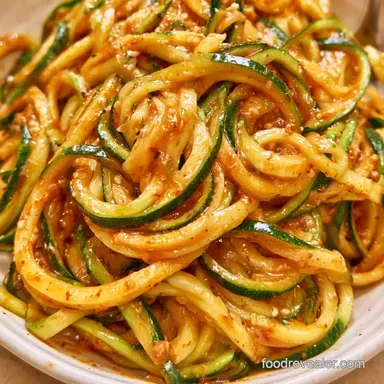
Failure-Proof Zucchini Asian Noodles
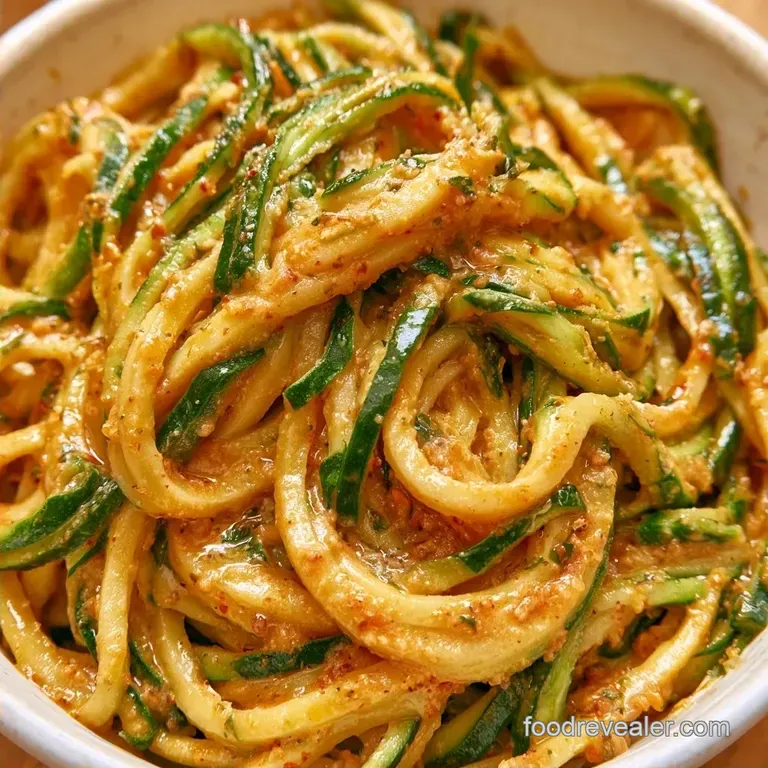
- Time: 10 min active + 10 min resting
- Flavor/Texture Hook: Savory sesame glaze with an al dente crunch
- Perfect for: Fast weeknight dinner or low carb meal prep
- Zucchini Asian Noodles: No More Watery Bowls
- Why These Techniques Actually Work
- The Ingredients You'll Need
- Quick Timing and Yield
- Tools for the Job
- Making the Zoodles
- Fixing Common Texture Issues
- Adjusting the Batch Size
- Debunking Zoodle Myths
- Storing and Zero Waste
- What to Serve Beside It
- Different Flavor Twists
- Recipe FAQs
- 📝 Recipe Card
Zucchini Asian Noodles: No More Watery Bowls
The fragrance of toasted sesame oil hitting a hot skillet is the absolute highlight of this recipe. I used to avoid zoodles because they inevitably turned into a watery "zucchini soup," with the sauce merely floating on top of a puddle. It was honestly quite frustrating.
Everything changed when I started prepping the zucchini like a cucumber salad. By extracting the moisture before it ever hits the heat, the consistency is transformed. You get a crisp, satisfying snap and a glaze that actually adheres to the noodles.
The beauty of these Zucchini Asian Noodles lies in the balance. The vibrant, fresh crunch of the vegetable is offset by a savory, salty, and slightly sweet sauce. It's a light meal that packs a powerful punch of flavor.
Why These Techniques Actually Work
The Salt Cure: Salt draws water out of the zucchini cell walls through osmosis. Serious Eats' testing shows that this prevents the noodles from releasing liquid during cooking, which keeps your sauce thick.
Flash Sautéing: Cooking for exactly 2 minutes prevents the zucchini from breaking down. This keeps the "noodle" structure intact so they don't turn into mush.
The Glaze Balance: Using maple syrup and rice vinegar creates a sweet tart tension that cuts through the richness of the sesame oil. If you've tried my Asian zucchini recipe, you know how a bit of acidity makes the whole dish pop.
| Method | Time | Texture | Best For |
|---|---|---|---|
| Stovetop | 2 mins | Crisp/Tender | Fresh dinner |
| Raw | 0 mins | Crunchy | Cold salads |
| Oven | 10 mins | Soft/Roasted | Meal prep |
The Ingredients You'll Need
The zucchini is the hero here. I prefer the medium large ones because they have more consistent cores for long, continuous strands. Avoid the giant ones, as they have too many seeds and get soggy faster.
What Each Ingredient Does
| Ingredient | Role | If You Don't Have It |
|---|---|---|
| Zucchini | Base | Yellow squash (slightly softer) |
| Soy Sauce | Umami/Salt | Tamari or Coconut Aminos |
| Sesame Oil | Nutty Aroma | Toasted walnut oil |
| Rice Vinegar | Acidity | Apple cider vinegar |
The Full List
- 3 large (approx. 2 lbs / 900g) zucchini
- 1 tsp (6g) kosher salt Why this? Coarse grains draw water out more evenly
- 3 tbsp (45ml) soy sauce
- 1 tbsp (15ml) toasted sesame oil
- 1 tbsp (15ml) rice vinegar
- 1 tbsp (21g) maple syrup Why this? Adds a woody sweetness that balances soy
- 1 tsp (5g) freshly grated ginger
- 2 cloves (6g) garlic, minced
- 1/4 tsp (1g) red pepper flakes
- 2 stalks (10g) green onion, thinly sliced
- 1 tbsp (9g) toasted sesame seeds
- 1 tsp (5g) black sesame seeds
Quick Timing and Yield
This is one of those recipes that feels like it takes longer than it does because of the resting time.
- Prep time: 10 minutes
- Cook time: 2 minutes
- Total time: 20 minutes
- Servings: 4 servings
Tools for the Job
While a professional kitchen isn't necessary, a few specific tools can speed things up. A spiralizer is the best bet for long noodles, though a julienne peeler also works if shorter pieces are fine.
I suggest using a large stainless steel or cast iron skillet. You'll want plenty of surface area to avoid crowding the zucchini, which prevents them from steaming instead of sautéing. A small whisk is also useful for emulsifying the oil and maple syrup.
Making the Zoodles
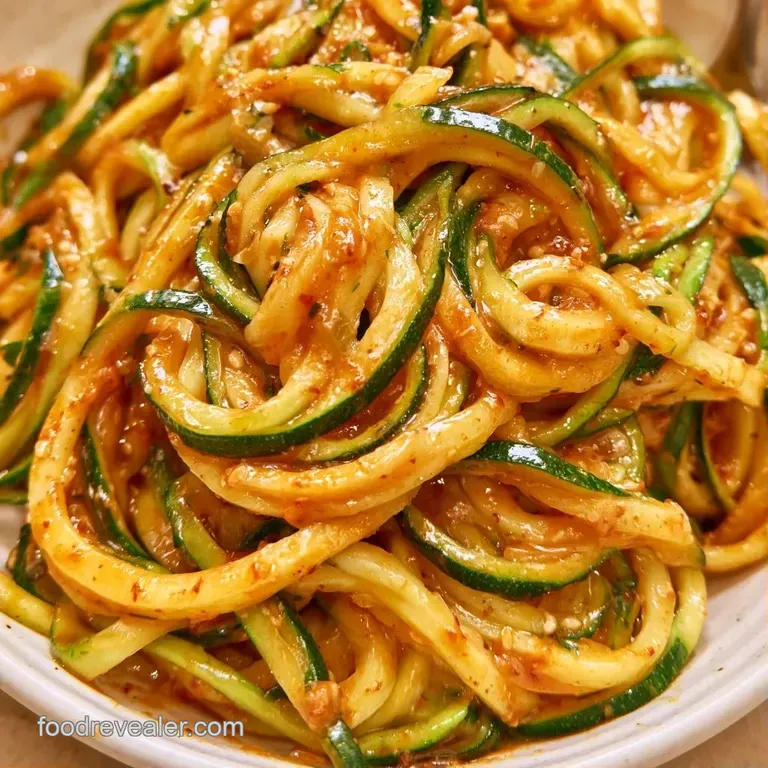
Stage 1: Removing Moisture
- Use a spiralizer to turn the zucchini into long, thin strands.
- Place the zoodles in a colander, toss with 1 tsp (6g) of salt, and let them rest for 10 minutes. Note: You will see water collecting in the sink.
- Lightly press the noodles by hand to expel extra liquid, rinse quickly under cold water, and pat dry.
Stage 2: Preparing the Sauce
- In a small bowl, whisk together the soy sauce, sesame oil, rice vinegar, maple syrup, ginger, garlic, and red pepper flakes.
- Stir vigorously until the mixture is smooth and glossy.
Stage 3: The Sauté
- Set a large skillet over medium-high heat.
- Stir-fry the drained zoodles for exactly 2 minutes until they are slightly softened but still have a bite.
- Pour the sauce over the noodles and toss for 30 seconds until a velvety glaze coats the strands.
- Remove from the heat immediately.
- Garnish with sliced green onions, toasted sesame seeds, and black sesame seeds.
Fixing Common Texture Issues
If your Zucchini Asian Noodles come out too watery, it's almost always a moisture issue. The zucchini is just releasing its internal water because it wasn't prepped enough.
Soggy Noodles
This happens if the zoodles weren't squeezed enough after salting. The water displaces the sauce, leaving you with a thin liquid.
Too Salty
If the sauce tastes like a salt bomb, you likely didn't rinse the zoodles well enough after the salt cure. A quick rinse under cold water is mandatory.
Sauce Not Clinging
This occurs when the pan isn't hot enough. The sauce needs to reduce slightly and "grip" the zucchini in those few seconds of heat.
| Problem | Root Cause | Solution |
|---|---|---|
| Watery bowl | Under squeezed zoodles | Use a kitchen towel to wring them |
| Mushy texture | Overcooked (over 2 mins) | Set a timer for 2 minutes exactly |
| Bland flavor | Low heat during toss | High heat for 30 seconds only |
Adjusting the Batch Size
When scaling Zucchini Asian Noodles, be careful with the salt and the pan size.
Scaling Down (Half Batch): Use a smaller skillet so the sauce doesn't evaporate too quickly. Use 1/2 tsp of salt, but keep the resting time at 10 minutes.
Scaling Up (Double Batch): Do not double the zucchini in one pan. Work in two batches. If you crowd the pan, the temperature drops and the zoodles will steam and get soggy. Increase the soy sauce and maple syrup by 1.5x rather than 2x to avoid over seasoning.
| Goal | What to change |
|---|---|
| More Crunch | Reduce sauté to 90 seconds |
| Thicker Sauce | Add 1 tsp cornstarch to sauce |
| More Heat | Increase pepper flakes to 1/2 tsp |
Debunking Zoodle Myths
Sautéing zoodles doesn't "seal" them. The idea that heat creates a barrier to keep water in is a myth. The only way to prevent wateriness is the salt cure and short cook time.
Also, you don't need to peel the zucchini. The skin provides the structural integrity that keeps the noodles from collapsing. Removing it makes them too fragile for the pan.
Storing and Zero Waste
Zucchini Asian Noodles are best eaten immediately. However, you can store them in the fridge for up to 2 days in an airtight container. Note that they will release more water as they sit, so you may need to drain them again before reheating.
To reheat, toss them in a hot pan for 60 seconds. Do not microwave them, or they'll turn into mush.
For zero waste, save the zucchini ends and peelings. I toss mine into a freezer bag with other veggie scraps to make a homemade stock. If you have leftover sauce, it's great as a marinade for tofu or shrimp.
What to Serve Beside It
Since this dish is quite light, it works best as a side or part of a larger spread. It pairs well with a protein that has a sear, like grilled salmon or crispy tofu.
If you want a full meal, serve these Zucchini Asian Noodles over a small bed of jasmine rice to soak up the extra glaze. For something heartier, try adding a Stir Fry with Chicken recipe to the plate for extra protein.
Different Flavor Twists
You can easily tweak these Zucchini Asian Noodles to fit your mood.
The Spicy Kick: Add a squeeze of Sriracha or a teaspoon of Gochujang to the sauce whisking phase for a deeper, fermented heat.
The Nutty Twist: Stir in a tablespoon of creamy peanut butter. This changes the profile to something more like a Satay, making the dish feel more filling.
The Keto Version: Use a monk fruit sweetener or a drop of stevia instead of maple syrup. The soy sauce can be swapped for coconut aminos to keep it strictly low carb.
I honestly love these Zucchini Asian Noodles because they prove you don't have to sacrifice flavor for a healthy swap. Just remember: salt, squeeze, and flash fry. That's the whole game.
Recipe FAQs
How do you prevent zoodles from becoming soggy?
Toss the spiralized zucchini with salt and let sit for 10 minutes. Squeeze out the excess liquid and pat dry before cooking to ensure a crisp texture.
Are zucchini noodles healthier than grain-based pasta?
Yes, they are significantly lower in calories and carbs. They provide a nutrient-dense, vegetable-based alternative to traditional wheat noodles.
Which ingredients create the best flavor profile here?
The combination of soy sauce, sesame oil, and rice vinegar. This trio provides a salty, nutty, and acidic balance. If you loved the savory-sweet balance in this recipe, see how we use the same Asian-inspired profile in our Japanese zucchini.
Can I cook the zucchini for longer than two minutes?
No, avoid overcooking them. Sautéing beyond two minutes causes the zucchini to release water and lose its structure, turning the dish mushy.
Is it true that zucchini must be peeled before spiralizing?
False. The skin provides structural integrity and color, so leave it on for the best results.
What is the proper way to reheat these noodles?
Toss them in a hot pan for 60 seconds. Avoid using a microwave, as it breaks down the vegetable's cell walls and creates a soggy consistency.
Zucchini Asian Noodles in 22 Minutes