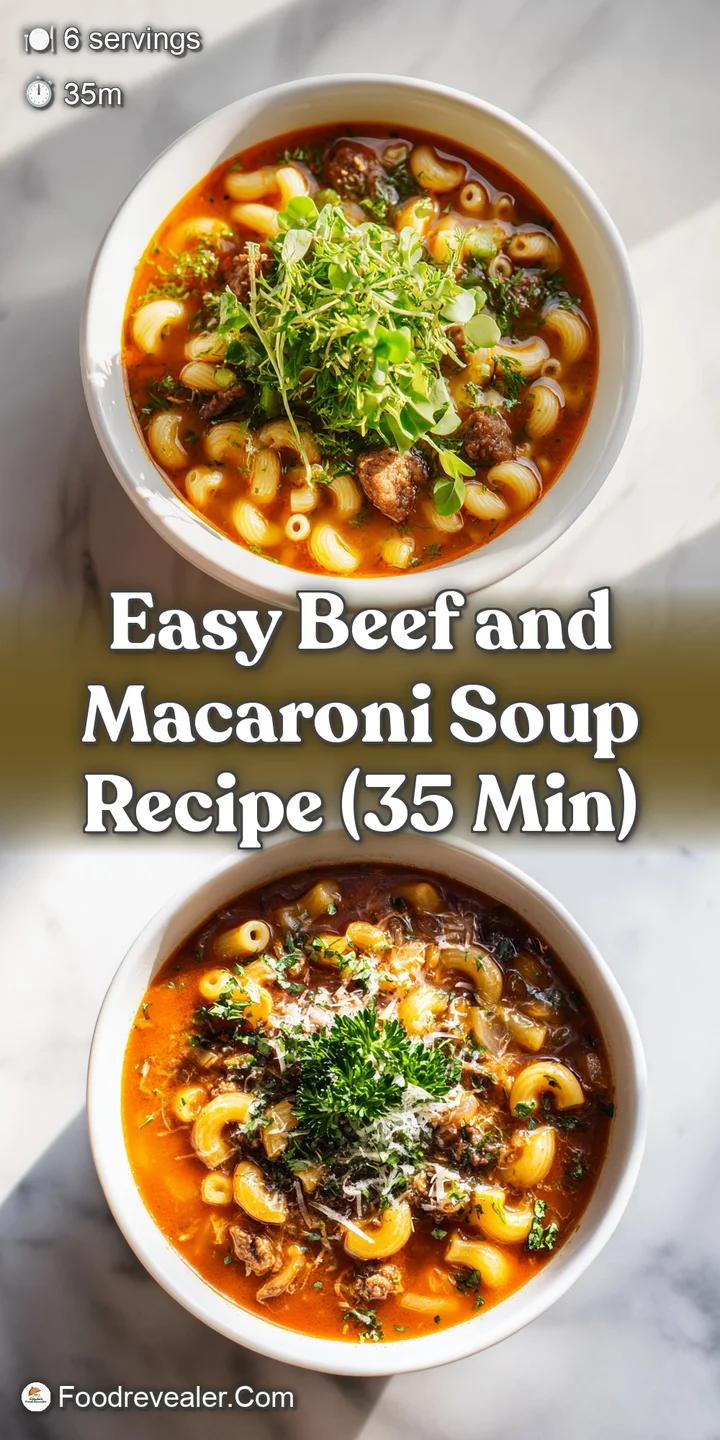
Beef and Macaroni Soup: Hearty One-Pot
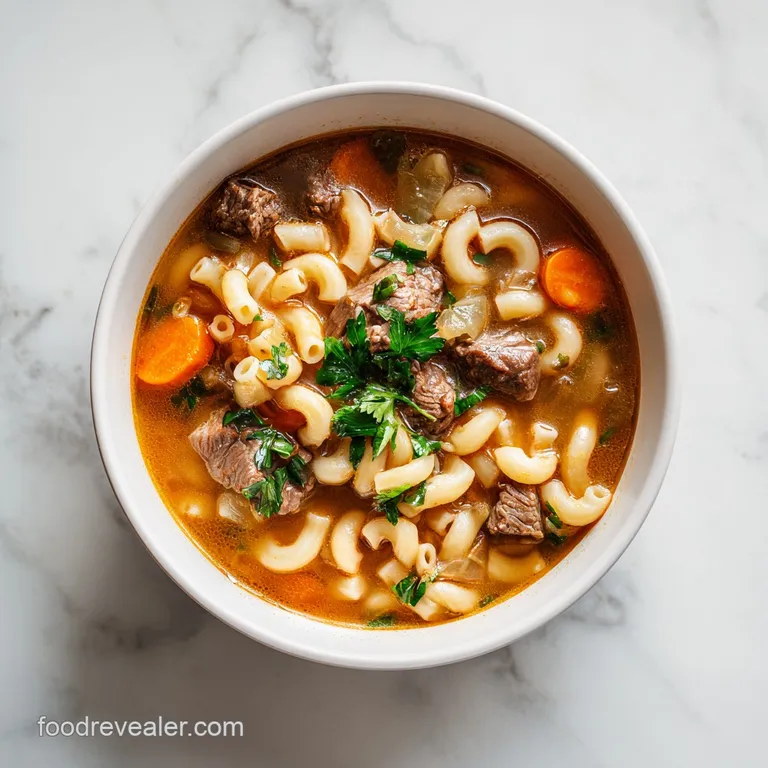
- Time: Active 10 minutes, Passive 25 minutes, Total 35 minutes
- Flavor/Texture Hook: Savory, beefy broth with velvety pasta and tender vegetables
- Perfect for: Busy weeknight family dinners or stress free meal prep
Why You'll Love Beef and Macaroni Soup
The sound of ground beef hitting a hot heavy bottomed pot is one of my favorite kitchen noises. It starts as a wet slap and quickly turns into a rhythmic, energetic sizzle that fills the room with the scent of browning meat.
I remember my grandmother making a version of this on rainy Tuesday afternoons in Manchester, the steam fogging up the windows while the kitchen filled with the aroma of dried oregano and toasted onions.
It was the kind of meal that made the world feel small and safe, and it’s a tradition I’ve kept alive for my own family because it’s just so reliable.
This version is everything a comfort classic should be. We aren't just boiling meat and noodles here; we are building layers of flavor that satisfy the soul. By taking an extra minute to really brown the beef and sauté the tomato paste, you transform simple pantry staples into something that tastes like it’s been simmering on the stove for hours.
It’s a thick, rib sticking soup that straddles the line between a stew and a traditional broth, making it the ultimate solution for those nights when everyone is starving and you need something substantial on the table fast.
You can trust this recipe because I’ve made all the mistakes for you. I’ve ended up with the "noodle sponge" where the pasta absorbs every drop of liquid, and I’ve dealt with greasy surfaces that look less than appetizing.
Through those kitchen fails, I’ve learned exactly how to time the macaroni and how to balance the acidity of the tomatoes so every spoonful is balanced. We're going for a velvety mouthfeel and a deep, savory punch that will have everyone reaching for seconds before the first bowl is even finished.
Recipe Specs
Before we get the stove going, let’s look at the hard numbers. Having these checkpoints in mind helps ensure your Beef Stroganoff in recipe style comfort comes out exactly right every time.
- 1. Weight
- 150g of diced onion provides the perfect aromatic base without overwhelming the beef.
- 2. Temperature
- Sauté the tomato paste until it turns a dark brick red, which usually happens around 2 minutes on medium heat.
- 3. Time
- Exactly 8 to 10 minutes for the macaroni is the sweet spot for al dente texture in a hot liquid.
Cook Method Comparison
| Method | Time | Texture | Best For |
|---|---|---|---|
| Stovetop | 35 minutes | Al dente pasta | Quick weeknight meals |
| Slow Cooker | 4 hours | Very tender beef | Hands off morning prep |
| Instant Pot | 20 minutes | Fully infused broth | Maximum speed |
Using the stovetop method allows you to control the evaporation and the exact doneness of the pasta. While the slow cooker is great for convenience, you run the risk of the vegetables becoming too soft if you aren't careful with your timing.
For this specific dish, the stovetop really is king because you can monitor the "Noodle Sponge" effect in real time and adjust your broth levels accordingly.
Ingredient Deep Dive
The magic of this Beef and Macaroni Soup lies in the quality of your foundation. Since we’re using ground beef, I always suggest a 90/10 lean ratio. It provides enough fat to sauté the vegetables but doesn't leave you with a pool of oil at the top of your pot.
If you only have 80/20, just make sure you are diligent about draining the excess fat after browning, or your broth will lose its clarity and take on a heavy, greasy feel.
For the Flavor Base
The trinity of onion, carrots, and celery (often called mirepoix) is non negotiable here. I like to dice them quite small, about 1/4 inch rounds for the carrots, so they cook through at the same rate the beef browns.
The 150g of yellow onion provides a natural sweetness that balances the 14.5 oz of canned diced tomatoes. Don't skip the garlic, either. Three cloves might seem like a lot, but in 1.4 liters of broth, it mellows out and adds a necessary aromatic depth.
For the Broth & Body
Low sodium beef broth is your best friend. It gives you total control over the seasoning. If you use full sodium broth, the Worcestershire sauce and the natural salt in the tomato paste might push the dish into "too salty" territory. The tomato paste itself is a secret weapon.
When you cook it down with the meat, it caramelizes, adding a layer of umami that makes the soup taste much richer than its 35 minute cook time suggests.
The Science of Starch Suspension: As the 200g of dry elbow macaroni cooks directly in the broth, it releases starch molecules. These molecules swell and create a natural thickening effect, transforming the thin beef broth into a velvety, more cohesive liquid that clings to the noodles.
| Ingredient | Science Role | Pro Secret |
|---|---|---|
| Ground Beef (450g) | Umami & Structure | Brown it in chunks, don't crumble it into "sand" immediately. |
| Tomato Paste (2 tbsp) | Flavor Catalyst | Sauté until dark red to remove the metallic tinny aftertaste. |
| Elbow Macaroni (200g) | Thickening Agent | Add at the very end to prevent the pasta from disintegrating. |
The choice of pasta matters more than you’d think. Elbow macaroni is classic because its hollow center traps the savory broth, but any small shape like ditalini or even shells will work. Just keep an eye on the weight; 200g is the limit for 1.4 liters of broth if you want to keep it "soupy." Anything more and you’re moving into casserole territory, much like a Crockpot Potato Soup recipe can become too thick if the starch isn't managed.
Equipment Needed
You don't need a professional kitchen to make a stellar soup, but a few specific tools make the process much smoother. A heavy bottomed pot, like a 5 quart Dutch oven, is ideal. The thick walls distribute heat evenly, which prevents the beef from burning in the center while the edges stay cold.
It also holds heat well once you add the 6 cups of beef broth, bringing the soup back to a simmer quickly.
A sturdy wooden spoon is another essential. You’ll need it to scrape the "fond" (those little brown bits) off the bottom of the pot after browning the meat. Those bits are pure flavor gold. You’ll also want a sharp chef’s knife for the 150g of onion and 120g of carrots.
Uniform cuts mean uniform cooking, which is the hallmark of a reliable home cook. Finally, a fat separator or a large spoon is helpful if you find your beef was a bit fattier than expected and you need to skim the surface.
Chef's Tip: Freeze your tomato paste in 1 tablespoon dollops on a parchment lined tray. Once frozen, pop them into a bag. You’ll always have exactly what you need for recipes like this without wasting half a can.
The Cooking Process
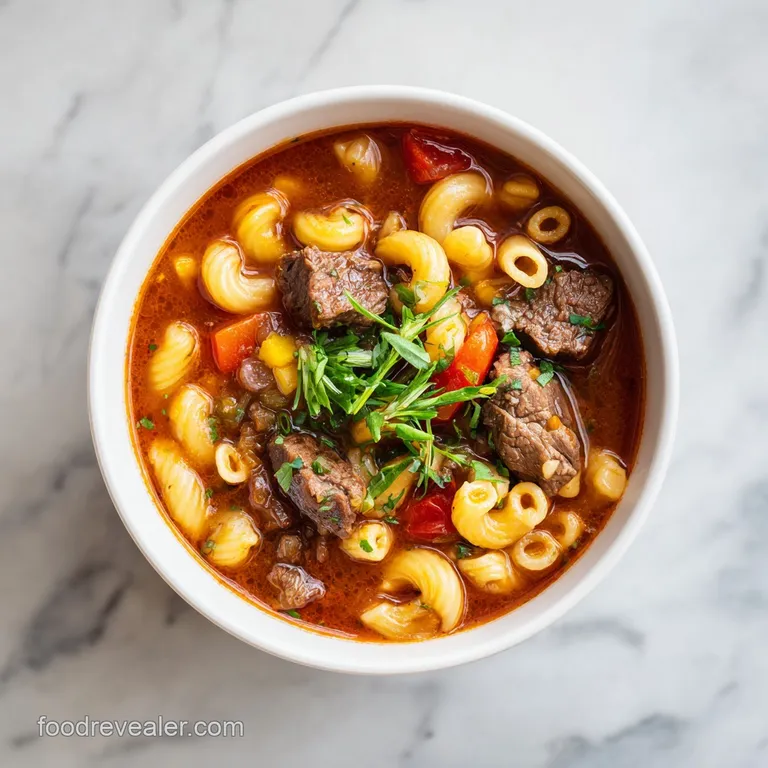
Building flavor in stages is the secret to a soup that tastes like it came from a bistro. We start high and fast to get color on the meat, then low and slow to marry the flavors together. Follow these steps, and you'll avoid the dreaded bland broth.
1. Developing the Beef Base
Start by heating your Dutch oven over medium high heat. Add the 1 lb of lean ground beef. Instead of breaking it up into tiny pieces immediately, let it sit for 2 minutes to develop a deep brown crust. This is the Maillard reaction in action, creating hundreds of new flavor compounds.
Once you see that color, break it up and add the 150g of diced onion, 120g of carrots, and 100g of celery.
2. Building the Liquid Gold
Sauté the vegetables with the beef for about 5 to 7 minutes until the onions are translucent and the carrots begin to soften. Now, push everything to the sides and drop the 2 tablespoons of tomato paste into the center.
Cook it for 2 minutes, stirring constantly, until it smells slightly sweet and looks dark red. Add the 3 cloves of minced garlic during the last 60 seconds so it doesn't burn.
3. Simmering to Perfection
Deglaze the pot by pouring in a splash of the 6 cups of beef broth and scraping the bottom. Add the remaining broth, the 14.5 oz canned diced tomatoes (with their juices), 1 tablespoon of Worcestershire sauce, 1 teaspoon of dried oregano, and 1 teaspoon of dried basil.
Bring the mixture to a boil, then reduce the heat and simmer for 10 minutes. This allows the vegetables to fully tenderize before we introduce the pasta.
4. Finishing with the Pasta
Add the 1.5 cups of dry elbow macaroni directly into the pot. Cook for 8 to 10 minutes until the pasta is tender but still has a slight bite. Don't walk away during this stage! Stir occasionally to make sure the macaroni doesn't stick to the bottom.
Taste the broth and add salt and cracked black pepper as needed. Remember, the pasta will continue to soften slightly even after you turn off the heat, so err on the side of "al dente."
Decision Shortcut - If you want a thicker, stew like consistency, let the soup sit for 15 minutes after cooking; the pasta will absorb more liquid.
- If you want a clearer, lighter broth, boil the macaroni separately and add it to each bowl just before serving. - If you want extra depth, add a Parmesan rind to the broth while it simmers with the vegetables.
How to Fix Common Problems
Even the best cooks run into trouble sometimes. The most common issue with any Rotisserie Chicken and recipe or beef soup is the texture of the starch. If you find your soup has turned into a thick porridge overnight, don't panic. It's just the pasta doing its job of absorbing liquid.
Why Your Macaroni is Mushy
This usually happens because the pasta was cooked too long or the soup was kept at a rolling boil. When pasta overcooks, the protein bonds break down, and it loses its structure. Next time, try to pull the pot off the heat about 1 minute before you think the pasta is actually done.
The residual heat will finish the job perfectly.
Correcting an Oily Surface
If your ground beef was higher in fat, you might see orange droplets floating on top. It doesn't ruin the flavor, but it can feel heavy. The easiest fix is to take a rolled up paper towel and lightly touch the surface of the soup; it will wick up the oil without taking the broth.
Alternatively, if you have time, chilling the soup makes the fat solidify at the top, allowing you to lift it off in one piece.
| Problem | Root Cause | Solution |
|---|---|---|
| Bland Broth | Under seasoned meat | Add a splash of Worcestershire sauce or a pinch of salt at the end. |
| Disappearing Liquid | Pasta absorption | Stir in an extra cup of warm beef broth before serving. |
| Metallic Taste | Raw tomato paste | Ensure you sauté the paste for at least 2 minutes before adding liquid. |
Common Mistakes Checklist - ✓ Pat the vegetables dry before sautéing to ensure they brown rather than steam. - ✓ Don't skip the Worcestershire sauce; it provides the "backbone" of the savory flavor.
- ✓ Avoid adding the pasta too early, or it will disintegrate before the carrots are soft. - ✓ Use a low sodium broth so you can control the final salt level yourself. - ✓ Stir the pot every few minutes once the macaroni is added to prevent sticking.
Dietary Adaptations
One of the reasons I love this recipe is how easy it is to tweak for different needs. If you’re looking for a Matzo Ball Soup recipe alternative that fits a specific diet, this beef and macaroni base is incredibly flexible. You can swap the protein, change the starch, or even go entirely plant based without losing that comforting essence.
Making a gluten-free Beef and Noodle Soup
To make this gluten-free, simply swap the elbow macaroni for your favorite gluten-free pasta. Be aware that corn or rice based pastas tend to shed more starch and can become mushy faster than wheat pasta.
I recommend cooking gluten-free noodles separately and adding them to individual bowls to maintain the best texture. Also, double check your Worcestershire sauce label, as some brands contain barley malt.
The Vegan "Beefy" Twist
For a plant based version, replace the ground beef with 450g of brown lentils or a meat substitute. Use vegetable broth instead of beef broth and swap the Worcestershire sauce for a vegan version or a splash of soy sauce mixed with balsamic vinegar.
The lentils will provide a similar earthy richness and plenty of protein, making it just as satisfying as the original.
Freezing and Reheating Guide
This soup is a meal prepper's dream, but there is one golden rule: if you plan to freeze it, do not add the pasta. Pasta that has been frozen and thawed in broth often turns into a gummy mess. Instead, freeze the "soup base" (the beef, veggies, and broth).
When you’re ready to eat, bring the base to a boil and drop in fresh macaroni.
- - Fridge
- Keep in an airtight container for up to 3 days. Note that it will thicken as it sits.
- - Freezer
- The base stays fresh for up to 3 months. Store in heavy duty freezer bags laid flat to save space.
- - Reheating
- Heat on the stovetop over medium heat. You will likely need to add 1/2 cup of water or broth to loosen the consistency as the pasta will have absorbed liquid in the fridge.
Zero Waste Tip: Don't throw away your celery leaves! Finely chop them and use them as a garnish. They have a concentrated celery flavor that adds a fresh, herbal note to the finished dish.
Also, if you have leftover carrots or onions that are looking a bit sad, chop them up and throw them in this soup is very forgiving of extra veggies.
Serving Suggestions
Presentation is the final layer of flavor. While this is a humble "pot to bowl" meal, a few small touches can make it feel special. I always serve this with a side of crusty bread or a grilled cheese sandwich for dipping. The contrast between the soft, velvety soup and the crunch of toasted bread is unbeatable.
The Bistro Touch: Gremolata Topping
If you want to impress, top each bowl with a simple gremolata a mix of minced parsley, lemon zest, and a tiny bit of garlic. The brightness of the lemon cuts through the richness of the beef and tomatoes, making every bite pop.
A heavy dusting of freshly grated Parmesan cheese is also a classic choice that adds a salty, nutty finish.
The Classic Pairing: Grilled Cheese
There is nothing quite like a sharp cheddar grilled cheese alongside a bowl of Beef and Macaroni Soup. Use a thick sourdough bread and plenty of butter. The tang of the sourdough and the melt of the cheese perfectly complement the savory, oregano spiced broth.
It’s the ultimate comfort combo that will satisfy even the pickiest eaters at your table. Trust me, once you try this layered approach to flavor, you’ll never go back to the basic version again. It's reliable, it's hearty, and it truly satisfies the soul.
Recipe FAQs
How to cook beef macaroni soup?
Brown the beef first, then sauté the aromatics. Heat your pot, brown the ground beef until deeply colored, then add onions and carrots and cook until soft. Deglaze with broth and simmer everything before adding the macaroni near the end of the cooking time.
Should I cook macaroni before adding to soup?
No, cook it directly in the broth. Cooking the macaroni in the soup releases starch, which naturally thickens the liquid into a velvety consistency. If you pre-cook it, you'll end up with a thinner broth, unless you prefer to boil it separately for freezing purposes.
What is the best soup to eat for losing weight?
No single soup guarantees weight loss, but this can be adapted. To make this dish lighter, use 95% lean ground beef, skim all surface fat after browning, and use low-sodium broth.
If you enjoyed controlling the texture here, applying similar starch management principles will help keep the calorie density lower.
What kind of beef is best for macaroni soup?
Use 90/10 ground beef for the best balance. This lean-to-fat ratio provides enough flavor to brown properly without leaving excessive grease floating on the surface of the finished broth. If you use 80/20, be sure to drain the rendered fat thoroughly after browning the meat.
Is it true that adding pasta too early makes the soup mushy?
Yes, this is a common misconception that relies on precise timing. Pasta swells significantly in hot liquid; adding it too early means it overcooks during the simmering phase while you wait for the vegetables to soften. Add the macaroni only for the last 8 to 10 minutes of cooking.
Can I substitute elbow macaroni with another pasta shape?
Yes, small shapes work best for trapping the broth. Ditalini or small shells are excellent substitutes as they hold the savory liquid inside their centers. If you master the technique of judging pasta doneness in this soup, you can transfer that skill when preparing our Healthy Street Corn recipe variation.
How can I make the broth taste richer without simmering for hours?
Caramelize the tomato paste before adding liquid. After browning the beef, push the solids aside and cook 2 tablespoons of tomato paste directly on the hot bottom of the pot for about two minutes until it darkens to a brick red color.
This step unlocks intense umami flavors essential for a deep, slow cooked taste profile.
Beef Macaroni Soup Quick
Ingredients:
Instructions:
Nutrition Facts:
| Calories | 304 kcal |
|---|---|
| Protein | 23.4 g |
| Fat | 6.8 g |
| Carbs | 35.8 g |
| Fiber | 3.2 g |
| Sugar | 5.4 g |
| Sodium | 565 mg |
