Easy Peach Cobbler with Canned Peaches

- Time: Active 10 minutes, Passive 40 minutes, Total 50 minutes
- Flavor/Texture Hook: Syrupy, velvety peaches under a shatter crisp, buttery crust
- Perfect for: Last minute guests or managing weeknight kitchen chaos
- Getting the Perfect Easy Golden Peach Cobbler Every Time
- Comforting Textures and Sweet Warm Aromas
- The Physics of the Rise
- Efficiency Metrics and Time Targets
- The Elements of Sweet Success
- Selecting Your Elements and Substitutes
- Essential Tools for Fruit Desserts
- A Step-by-Step Baking Guide
- Fixing Texture and Moisture Issues
- Adjusting the Recipe Volume
- Creative Spins on Fruit Flavors
- Preserving Freshness and Reducing Waste
- The Best Ways to Serve
- Recipe FAQs
- 📝 Recipe Card
Getting the Perfect Easy Golden Peach Cobbler Every Time
I remember the first time I tried making a cobbler with canned peaches. It was a Tuesday night, the kitchen was a mess, and I just needed something sweet that didn't involve a trip to the store. I dumped everything in a dish, hoping for the best, but it came out like a soggy, sugary soup.
It was tasty, sure, but the texture was all wrong. I realized right then that "easy" shouldn't mean "lazy" when it comes to the science of a good crust.
Since that soggy Tuesday, I've tweaked this recipe more times than I can count. I've learned that the secret isn't just in the peaches; it's in how you treat the juice and the topping.
This version is my go to because it uses two cans of peaches you probably already have in the back of your cupboard, but it tastes like you spent the morning peeling fruit at a farm stand. We're going for that specific contrast between the soft, jammy fruit and the parts of the topping that get crunchy and caramelized.
You don't need a stand mixer or any fancy gadgets for this one. We're keeping it simple with a bowl and a whisk. This is the kind of recipe I text my friends when they ask for something "impressive but impossible to mess up." It's reliable, it's fast, and it fills the house with the scent of warm cinnamon and vanilla.
Let's get into what actually makes this work so you can stop worrying about soggy bottoms forever.
Comforting Textures and Sweet Warm Aromas
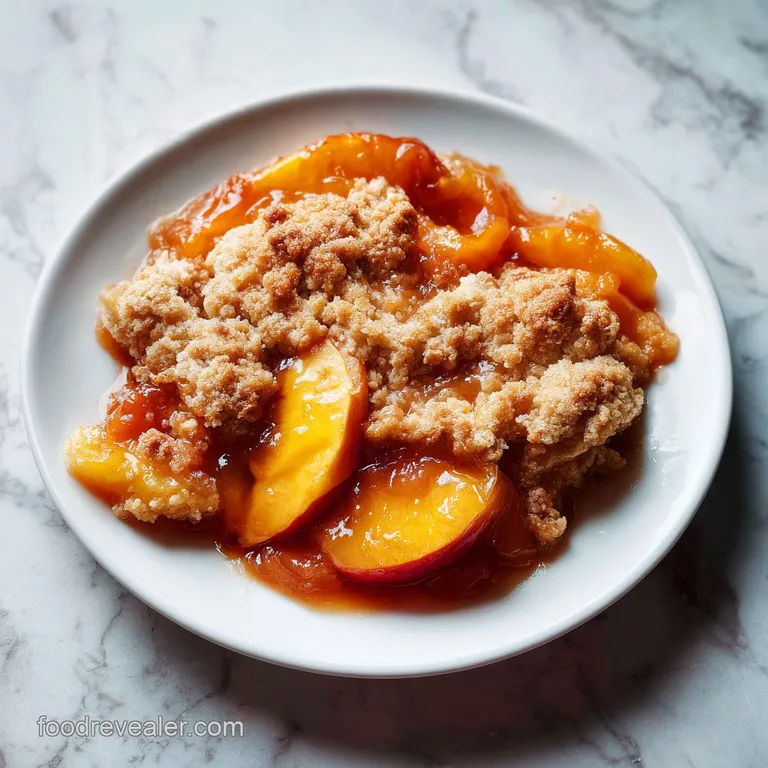
When you pull this dish out of the oven, the first thing you'll notice is the way the peach juice has thickened into a glossy, amber syrup that bubbles up around the edges of the crust. The topping shouldn't look like a flat cake; it should look like a series of golden, craggy islands.
That uneven surface is where the magic happens, creating little pockets of crunch that stay firm even when you pour heavy cream or melt a scoop of vanilla bean ice cream over the top.
The flavor profile here is intentionally balanced. Because canned peaches sit in syrup, they can be one note. We use lemon juice and zest to cut through that sugar, providing a necessary brightness that wakes up the palate.
The ginger and nutmeg add a subtle warmth that lingers, making the whole dish feel cozy rather than just sweet. It's a velvety experience that hits all the right notes of salt, acid, and sugar.
The Physics of the Rise
Starch Gelatinization: The cornstarch binds with the reserved peach juice during heating, creating a thick, translucent slurry that prevents the fruit layer from becoming a watery mess.
Chemical Leavening: Baking powder reacts twice first when it hits the milk and again when it feels the oven's heat to push the dough upward, creating a light, airy crumb.
Chef's Tip: Add a tiny pinch of finely ground black pepper to the peach mixture. It sounds weird, but it mimics the "bite" of fresh peaches and makes the ginger taste twice as strong.
Efficiency Metrics and Time Targets
| Method | Total Time | Texture | Best For |
|---|---|---|---|
| Oven Bake | 50 minutes | Shatter crisp top, jammy base | Maximum flavor and traditional crust |
| Stovetop | 20 minutes | Dumpling style, soft and pillowy | Quick cravings or camping trips |
| Air Fryer | 25 minutes | Ultra crunchy, deeply browned | Small batches (half recipe) |
Cooking in the oven is my preferred route because it allows the Maillard reaction to fully develop on the sugar crust. The stovetop method is faster, but you'll lose that "shatter" factor that makes a cobbler so satisfying.
If you're in a rush, the air fryer is a brilliant middle ground, though you'll need to work in smaller batches to ensure the middle cooks through without burning the top.
The key to a successful bake is ensuring your oven is fully preheated. If you slide the dish into a cold oven, the butter in the topping will melt before the leavening agents can lift the dough, resulting in a dense, greasy lid rather than a light biscuit.
The Elements of Sweet Success
The quality of your canned fruit matters more than you'd think. I always look for "peaches in juice" rather than "heavy syrup" to keep the sugar levels manageable, but if you only have the syrup packed kind, just reduce the granulated sugar in the topping by a tablespoon.
The flour provides the skeletal structure, while the melted butter ensures every bite feels rich.
| Ingredient | Science Role | Pro Secret |
|---|---|---|
| Cornstarch | Thickening agent | Mix with cold juice first to prevent lumps. |
| Baking Powder | Aeration | Ensure it's fresh (less than 6 months old) for maximum lift. |
| Lemon Zest | Aromatic balance | Rub it into the sugar before mixing to release essential oils. |
| Turbinado Sugar | Texture | The large crystals don't melt, providing a permanent crunch. |
A quick note on the milk: using low-fat milk keeps the topping light, but if you want something truly decadent, you can swap it for whole milk or even a splash of half and half. The sea salt is also non negotiable; it acts as a flavor magnifier for the vanilla and peach.
Selecting Your Elements and Substitutes
- 2 cans (15 oz each) sliced peaches: Drained, but keep 1/2 cup of that juice. Why this? Canned peaches are consistently ripe and provide a reliable texture year round.
- Substitute: 4 cups fresh peeled peaches (add 1/4 cup extra sugar).
- 1 tbsp fresh lemon juice: Brightens the fruit.
- Substitute: Apple cider vinegar (use only 2 tsp).
- 1 tsp ground cinnamon: The classic warmth.
- Substitute: Apple pie spice blend.
- 1 tbsp cornstarch: Thickens the "gravy."
- Substitute: 2 tbsp all purpose flour.
- 1.5 cups all purpose flour: The base for our topping.
- Substitute: gluten-free 1 to-1 baking flour (results in a slightly grittier texture).
- 0.5 cup melted unsalted butter: Provides fat and flavor.
- Substitute: Melted coconut oil (adds a subtle tropical scent).
- 0.75 cup low-fat milk: Hydrates the dough.
- Substitute: Unsweetened almond milk (works perfectly, same ratio).
Chef's Tip: Freeze your lemon before zesting. It makes the zest come off in fine, dry shards that distribute much more evenly through the dough.
Essential Tools for Fruit Desserts
You don't need a whole arsenal to make this happen. A standard 9x9 inch baking dish or a 2 quart casserole dish is the perfect size for this volume of fruit. If you use a larger dish, the peaches will spread too thin and might scorch.
A whisk is helpful for getting the lumps out of the flour, but a sturdy fork works just as well if you're keeping things minimal.
I prefer a glass or ceramic baking dish over metal for cobblers. Metal heats up very quickly, which can lead to the edges of your fruit burning before the center of the topping is fully baked. Glass provides a more even, gentle heat that allows the peaches to bubble and thicken slowly.
Plus, you get to see those beautiful layers through the side of the dish!
A step-by-step Baking Guide
- Preheat the oven to 350°F (180°C). Grease your baking dish lightly with a bit of butter.
- Prepare the fruit base. In your baking dish, combine the drained peaches, the reserved 1/2 cup juice, lemon juice, zest, cinnamon, nutmeg, ginger, cornstarch, and vanilla. Note: Mixing directly in the dish saves you from washing an extra bowl.
- Stir the fruit until the cornstarch is completely dissolved and the peaches are coated in spices.
- Whisk the dry ingredients. In a separate bowl, combine the flour, granulated sugar, baking powder, and salt.
- Add the liquids. Pour the melted butter and milk into the dry mixture. Stir until just combined. Note: Overmixing will lead to a tough, bread like topping instead of a tender one.
- Drop the topping. Use a large spoon to dollop the batter over the peaches. Don't worry about covering every square inch; the gaps allow steam to escape.
- Add the crunch. Sprinkle the turbinado sugar evenly over the batter.
- Bake for 40 minutes. The top should be deeply golden and the fruit juices should be thick and bubbling.
- Check for doneness. Insert a toothpick into the thickest part of the topping; it should come out clean.
- Rest the dish. Let it sit for at least 15 minutes before serving. This is critical to let the sauce set.
Fixing Texture and Moisture Issues
The Topping is Doughy
This usually happens if the oven temperature was too low or if the topping was dropped in one giant, thick mass. If the peaches were cold when they went in, they can also suck the heat away from the bottom of the dough.
| Problem | Root Cause | Solution |
|---|---|---|
| Doughy center | Topping is too thick | Spread batter into smaller "islands" next time. |
| Soggy bottom | Peaches too watery | Ensure you only use 1/2 cup juice and don't skip cornstarch. |
| Burnt top, raw middle | Oven too hot | Tent with foil and lower heat to 325°F to finish. |
Excessively Runny Sauce
If you find your cobbler is more like a soup, it likely didn't reach a high enough temperature. Cornstarch needs to hit a near boil (about 203°F) to "activate" its thickening power. If you pull the cobbler out the moment the top looks brown but the juices aren't bubbling vigorously, it won't set.
Common Mistakes Checklist - ✓ Don't use the entire can of juice; 1/2 cup is the sweet spot for a thick sauce. - ✓ Avoid overmixing the batter; stop as soon as the flour streaks disappear.
- ✓ Let the dish rest for 15 minutes; the sauce thickens significantly as it cools. - ✓ Check your baking powder's expiration date; old powder means a flat, heavy crust. - ✓ Use a shallow dish; deep dishes prevent the middle from cooking through properly.
Adjusting the Recipe Volume
Cutting the Recipe in Half
If you're cooking for two, you can easily halve this. Use one 15 oz can of peaches and keep 1/4 cup of juice. For the topping, use 3/4 cup flour, 1/4 cup sugar, and 1 tsp baking powder. Since you can't really use half an egg (though this recipe doesn't need one!), just halve the milk and butter.
Reduce the bake time by about 10 minutes, but keep an eye on the color.
Doubling for a Crowd
To double this for a 9x13 inch pan, use four cans of peaches. However, do not double the salt or the spices exactly; use 1.5x the amount of cinnamon and ginger to avoid overwhelming the fruit. You may need to increase the bake time by 5-10 minutes.
Decision Shortcuts
- If you want a Cake Like Texture, stir the peaches directly into the batter.
- If you want a Biscuit Texture, keep the batter thick and drop it in clumps.
- If you want a Deep Caramel Flavor, swap the white sugar in the topping for light brown sugar.
Creative Spins on Fruit Flavors
The Quick Cake Mix Shortcut
If you are truly short on time, you can swap the flour, sugar, and baking powder for 1.5 cups of dry yellow cake mix. Combine it with the melted butter and milk as directed. It will be sweeter and have a softer, more "funfetti" style crumb, but it's a great hack for a 5 minute prep.
The Easy Peach Cobbler with Biscuits Twist
For a more rustic, Southern look, you can use canned refrigerated biscuits. Cut each biscuit into quarters and toss them in cinnamon sugar before nesting them on top of the peaches. This version takes about 25-30 minutes to bake and results in a very tall, puffy crust.
Preserving Freshness and Reducing Waste
Storage: Keep leftovers in an airtight container in the fridge for up to 4 days. The topping will soften over time as it absorbs moisture from the peaches, but the flavor actually deepens by day two.
Freezing: You can freeze the baked cobbler for up to 3 months. Wrap it tightly in plastic wrap and then foil. To reheat, thaw in the fridge overnight and bake at 350°F for 15 minutes to crisp the top back up.
Zero Waste Tip: If you have leftover peach juice from the cans that you didn't use in the recipe, don't pour it down the drain! Simmer it in a small saucepan with a splash of vanilla until it reduces by half.
This creates a potent peach syrup you can use for cocktails, iced tea, or pouring over pancakes the next morning.
The Best Ways to Serve
While this is "tasty" on its own, it really begs for a creamy companion. The classic choice is high-quality vanilla bean ice cream, which melts into the warm crevices of the crust.
If you want something less sweet, a dollop of unsweetened Greek yogurt or a pour of cold heavy cream provides a beautiful temperature contrast.
For a final touch, I love to hit the hot cobbler with one last tiny sprinkle of sea salt. It sounds counterintuitive for a dessert, but it makes the peaches taste "peachier" and balances the richness of the butter.
Serve it warm, right out of the dish, and don't worry about making neat slices cobbler is meant to be messy and shared.
Dispelling Common Kitchen Myths
One common myth is that you must use fresh peaches for a "real" cobbler. In reality, unless peaches are at their absolute peak in mid summer, canned peaches are often superior because they are processed at their highest ripeness. Another myth is that the "batter on the bottom" method is the only way.
While popular, putting the batter on top like we do here ensures the crust gets direct heat, leading to that essential crispy on-the outside, tender on-the inside texture.

Recipe FAQs
What are the three essential components in a standard peach cobbler recipe?
Peaches, sugar, and a biscuit style topping. The fruit layer needs a thickener like cornstarch, while the topping requires flour, leavening (baking powder), and fat (butter).
Should you drain the juice from canned peaches for peach cobbler?
No, you should partially drain them. Reserve about 1/2 cup of the juice; this liquid is essential for creating the thick, syrupy base when combined with cornstarch.
What are the most common mistakes when making peach cobbler?
Overmixing the topping and failing to rest the final product. Overmixing develops gluten, making the topping tough, and skipping the 15-minute rest prevents the sauce from fully setting.
Can you use canned peaches for baking peach cobbler instead of fresh?
Yes, canned peaches are often ideal for reliability. They are consistently ripe and tender, but you must reduce added sugar because they are usually packed in syrup.
How do you prevent the cobbler topping from becoming soggy on the bottom?
Ensure the oven is fully preheated to 350°F (180°C) before baking. This high initial heat sets the butter in the topping before the moisture from the fruit can penetrate the dough.
Is it true you must use fresh lemon zest to balance the sweetness?
No, but it is highly recommended for flavor integrity. While you can omit it, the acid in the lemon juice and zest cuts through the canned fruit's heavy syrup, preventing the dessert from tasting flat.
How long must the cobbler rest after being removed from the oven?
Rest the cobbler for a minimum of 15 minutes before serving. This critical cooling period allows the cornstarch thickened syrup to gel and prevents the dessert from running when scooped.
Easy Canned Peach Cobbler
Ingredients:
Instructions:
Nutrition Facts:
| Calories | 296 kcal |
|---|---|
| Protein | 3.2 g |
| Fat | 12.2 g |
| Carbs | 44.8 g |
| Fiber | 1.8 g |
| Sugar | 23.4 g |
| Sodium | 248 mg |
