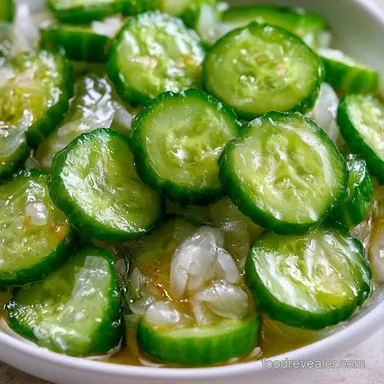
Snappy Water Bath Bread and Butter Pickles

- Time:15 mins active + 3 hrs salt curing
- Flavor/Texture Hook: Tangy, sweet, and snappy
- Perfect for: Pantry stocking and charcuterie boards
Water Bath Bread and Butter Pickles
There's nothing quite like that burst of tart, vinegary steam that greets you when you lift the lid. My first attempt was a failure; I used regular salad cucumbers and skipped the salt cure, which left me with soft, yellow strips.
That experience proved that you simply can't shortcut the science behind a perfect pickle.
The key ingredient is the pickling cucumber. While seedless varieties wrapped in plastic are great for salads, pickling cucumbers feature thicker skins and a firmer core. This structure allows them to withstand the intense brine and the heat of the water bath without falling apart.
The result is a mahogany-hued slice that delivers a complete flavor experience. You get a vivid contrast between the sharp acidity of apple cider vinegar and the rich, smooth sweetness of sugar. It's a timeless combination, though we've dialed up the intensity for a bit more punch.
Why These Pickles Stay Crisp
Salt Osmosis: Salt pulls water out of the cucumber cells. This makes the vegetable denser so it doesn't turn to mush when heated.
Acid Balance: Using a 5% acidity vinegar ensures the brine is strong enough to prevent spoilage while keeping the flavor bright.
Quick Details
Here is the timing breakdown. While the curing phase requires some patience, the amount of active work is quite low.
| Metric | Value |
|---|---|
| Prep Time | 3 hours 30 mins |
| Cook Time | 15 minutes |
| Total Time | 3 hours 45 mins |
| Yield | 5 pint jars |
What You'll Need
Stick with pickling cucumbers for the vegetable base rather than English ones. As noted by USDA FoodData, water levels vary across cucumber types, and the "slicing" variety will likely turn mushy.
Vegetables 4 lbs pickling cucumbers, cut into 1/4-inch discs Why this? Their firm cells maintain a crisp texture 2 cups white onion, cut into thin slivers Why this? Introduces a pungent, savory balance 1/3 cup pickling salt
Why this? Lack of iodine keeps the liquid transparent
The Brine 3 cups apple cider vinegar (5% acidity) Why this? Offers a softer, more fruity profile than white vinegar 2 cups granulated white sugar Why this? Creates that signature sweet butter-pickle flavor 1 tbsp mustard seeds
Why this? Contributes a mild, earthy spiciness 1 tsp celery seeds Why this? Adds a touch of savory, herbal depth 1/2 tsp ground turmeric Why this? Produces the characteristic yellow glow
Ingredient Swaps
| Original Ingredient | Substitute | Why It Works |
|---|---|---|
| Apple Cider Vinegar | White Distilled Vinegar | Provides a sharper, more acidic bite. Note: Lacks fruitiness |
| Granulated Sugar | Honey | Adds natural sugars. Note: Results in a deeper brown tint |
| White Onion | Shallots | Offers a gentler, sweeter taste. Note: Costs more |
Essential Gear

You'll need a large non reactive bowl. Avoid aluminum because the vinegar and salt will react with the metal and give your pickles a metallic taste. A stainless steel pot is the way to go for the brine.
For the canning, you need a water bath canner or a very deep stockpot. Make sure you have a bubble remover tool, or just use a plastic knife to poke around the edges.
Chef Note: If you don't have a bubble remover, a clean chopstick works just as well to get those air pockets out.
How to Make Them
Now we get to the preparation. Follow these directions closely to make sure your Water Bath Bread and Butter Pickles stay crisp and safe for the shelf.
- In a large bowl, mix the sliced cucumbers and onions with the pickling salt. Note: Make sure every piece is well-coated
- Allow the mixture to rest at room temperature for 3 hours. Wait for a pool of liquid to form at the bottom.
- Rinse the vegetables under a cold tap. Note: This washes away extra salt to prevent them from being too salty
- Use a colander to drain them thoroughly.
- In a stainless steel pot, stir together the apple cider vinegar, sugar, mustard seeds, celery seeds, and turmeric.
- Heat over medium high until simmering. Stir until all the sugar crystals have dissolved.
- Mix in the cucumbers and onions. Simmer for 2-3 minutes. Note: Avoid a hard boil to keep the pickles crunchy
- Place the hot pickles into sterilized jars, leaving a 1/2 inch gap from the rim.
- Clear any air bubbles and clean the rims.
- Use a water bath canner to process, following your local altitude instructions.
Troubleshooting Your Batch
If your pickles aren't hitting the mark, it's usually down to the prep. The most common issue is the texture. If they're soft, it's almost always because the salt cure was too short or the simmer was too aggressive.
Another common hiccup is the seal. If the lid doesn't pop, you might have had a bit of brine on the rim. Just re process them with a new lid.
Soft Instead of Crispy
This happens when the cucumbers retain too much water. The salt cure is the only way to prevent this.
Jars Didn't Seal
Check for debris on the rim of the jar. Even a tiny drop of sugar brine can prevent a vacuum seal.
Cloudy Brine
This is usually caused by impurities in the water or using non pickling salt. It doesn't affect the taste, but it looks less professional.
| Problem | Root Cause | Solution |
|---|---|---|
| Mushy slices | Skipped salt cure | Cure for full 3 hours |
| Too salty | Poor rinsing | Rinse longer under cold water |
| Lid won't seal | Dirty jar rim | Wipe rim with vinegar and re process |
Serving Suggestions
These are a powerhouse on a charcuterie board. I love pairing them with a sharp cheddar and some salty salami. The sweetness cuts right through the fat of the meat.
If you want to try something a bit different, use them in an Asian fusion style burger. The sweetness of the bread and butter profile mimics a ginger soy glaze when paired with a spicy mayo. They also go great with a side of Butter Sourdough for 4 recipe for a weirdly satisfying sweet and salty snack platter.
- The Snap
- Cold, crisp cucumber
- The Zing
- Apple cider vinegar
- The Base
- Earthy turmeric and celery seed
- The Finish
- Lingering sweetness
Storage and Scraps
Once processed in the water bath, these can sit in a cool, dark pantry for up to a year. Once you open a jar, move it to the fridge. They'll stay good for about 3 months in the refrigerator.
Don't toss the leftover onion ends from your prep. Throw them into a freezer bag with other veggie scraps (carrot tops, celery ends) to make a quick stock later.
Fresh vs. Shortcut
| Feature | Fresh Water Bath | store-bought |
|---|---|---|
| Texture | Snappy and dense | Often soft or limp |
| Flavor | Bright, complex | One dimensional sugar |
| Ingredients | Clean, no preservatives | High sodium, dyes |
Flavor Variations
You can easily customize this recipe to suit your preferences. For a bit more heat, stir in a pinch of red pepper flakes while the brine simmers. To achieve a richer taste, substitute the white sugar with a small amount of brown sugar.
If you're preparing sandwiches, these are the perfect pickles to use. They offer the ideal balance for a ham and swiss sandwich on Quick Sourdough French Bread.
Quick Adjustment Guide: More tang? → Stir 1 tbsp lemon juice into the brine Spicy kick? → Place 1 sliced habanero in every jar Darker color? → Use 1/2 cup molasses instead of some of the sugar
Scaling Your Batch
Cutting the recipe in half: Opt for a more compact pot for the brine to stop it from evaporating too quickly. Reduce the vegetable simmering time by roughly 20%, as the smaller volume will heat up more rapidly.
Doubling the recipe: Avoid doubling the salt and spices exactly. Use 1.5x the mustard and celery seeds to ensure the flavor doesn't become too medicinal. Process in two separate batches during canning to prevent your water bath canner from overflowing.
Dispelling Pickle Myths
Myth: You must boil the pickles to make them safe. Truth: Safety is ensured by the water bath process. Boiling the vegetables is done for texture and flavor, not for sterilization.
Myth: Any cucumber works for canning. Truth: Persian or English cucumbers contain too much water, which often leads to mushy results in a Water Bath Bread and Butter Pickles recipe.
Myth: Using table salt is fine. Truth: The anti-caking agents in table salt cause the brine to look cloudy. Pickling salt is pure NaCl, which keeps the jars clear.
Recipe FAQs
What is the processing time for the water bath?
Follow the processing time listed for your specific altitude and jar size. This ensures the heat penetrates the center of the jar to kill bacteria and create a vacuum seal.
Why do some pickles turn out soft?
A short salt cure or aggressive boiling usually ruins the texture. Skipping the 3-hour soak prevents excess water from leaving the cucumber, which often leads to mushiness.
Are bread and butter pickles fermented?
Actually, no. These are pickled using vinegar and sugar for preservation rather than lactic acid fermentation.
How to make these without canning them?
Skip the water bath processing and place the filled jars directly in the refrigerator. These quick pickles must be kept cold as they aren't shelf-stable; they pair great with our sourdough discard crackers for a quick snack.
Which mistakes should I avoid when pickling?
Avoid leaving brine on the jar rims before sealing. Even a small residue can prevent the lid from popping, meaning you'll have to re-process the jar with a new lid.
Is it true that any cucumber will work?
This one's false: Use specifically labeled pickling cucumbers. Standard slicing cucumbers have thinner skins and softer flesh that won't stay crisp in the brine.
Where should I store the jars after processing?
Keep them in a cool, dark pantry. They will remain shelf-stable for up to a year until opened, at which point they must move to the fridge.
Bread and Butter Pickles: Snappy